
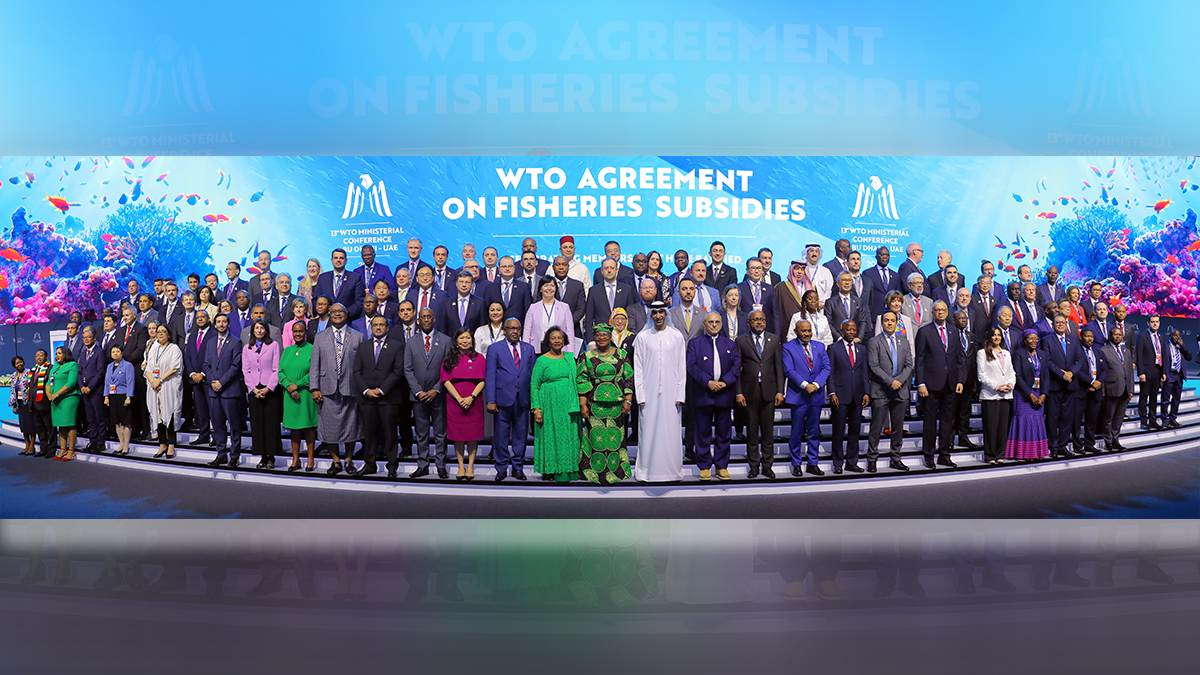
Manila, Philippines – After more than twenty years of intense negotiations, the World Trade Organization (WTO) finally secured its first multilateral agreement centered on environmental sustainability – the Agreement on Fisheries Subsidies. The deal aims to curb harmful subsidies that contribute to overfishing, illegal fishing, and the depletion of global fish stocks.
The agreement prohibits the most damaging forms of fisheries subsidies, particularly those that support illegal, unreported, and unregulated (IUU) fishing, as well as subsidies linked to overfished stocks and fishing activities in unregulated high seas. It also requires member states to exercise “special care” and “due restraint” when subsidizing fishing operations where the health of fish stocks remains unknown.
WTO Deputy Director-General Jennifer Nordquist welcomed the accord, stating that it seeks to promote responsible fishing practices, especially in ecologically sensitive and economically vital regions such as the Pacific Islands and archipelagic nations like the Philippines.
“The agreement addresses critical issues that threaten the long-term viability of the fisheries sector,” Nordquist said. “By curbing harmful subsidies, we hope to foster fairer competition and protect the marine resources that millions depend on.”
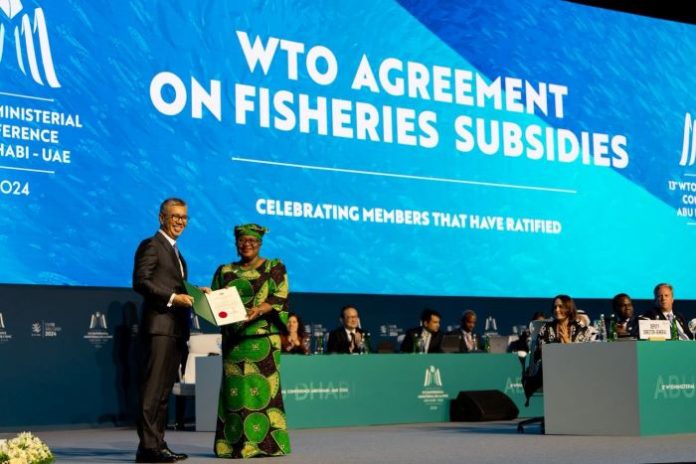
According to the WTO, the deal has the potential to safeguard the livelihoods of over 260 million people worldwide who rely on fishing. To date, 119 WTO members, including the Philippines (which accepted the agreement in 2024), have formally ratified it.
Relevance to the Philippines
In the Philippines, the agriculture, forestry, and fishing sector accounted for 7.9 percent of the country’s Gross Domestic Product (GDP) in 2025, slightly down from 8 percent the previous year. Tuna continues to be the top fisheries export commodity, generating $441.64 million in 2025, although both value and volume saw notable declines from the previous year.
Philippine officials believe the WTO agreement could help rebuild depleted fish stocks and create a more level playing field in the global market. However, many small-scale fisherfolk organizations remain deeply skeptical.
Voices from the Ground: Small-Scale Fishers Left Behind?
While the deal is being celebrated in Geneva as a landmark environmental achievement, critics argue that it fails to address the real struggles of traditional and small-scale fishers in developing countries.
Dedicated to Terence Repelente: A Tireless Voice for Small-Scale Fishers
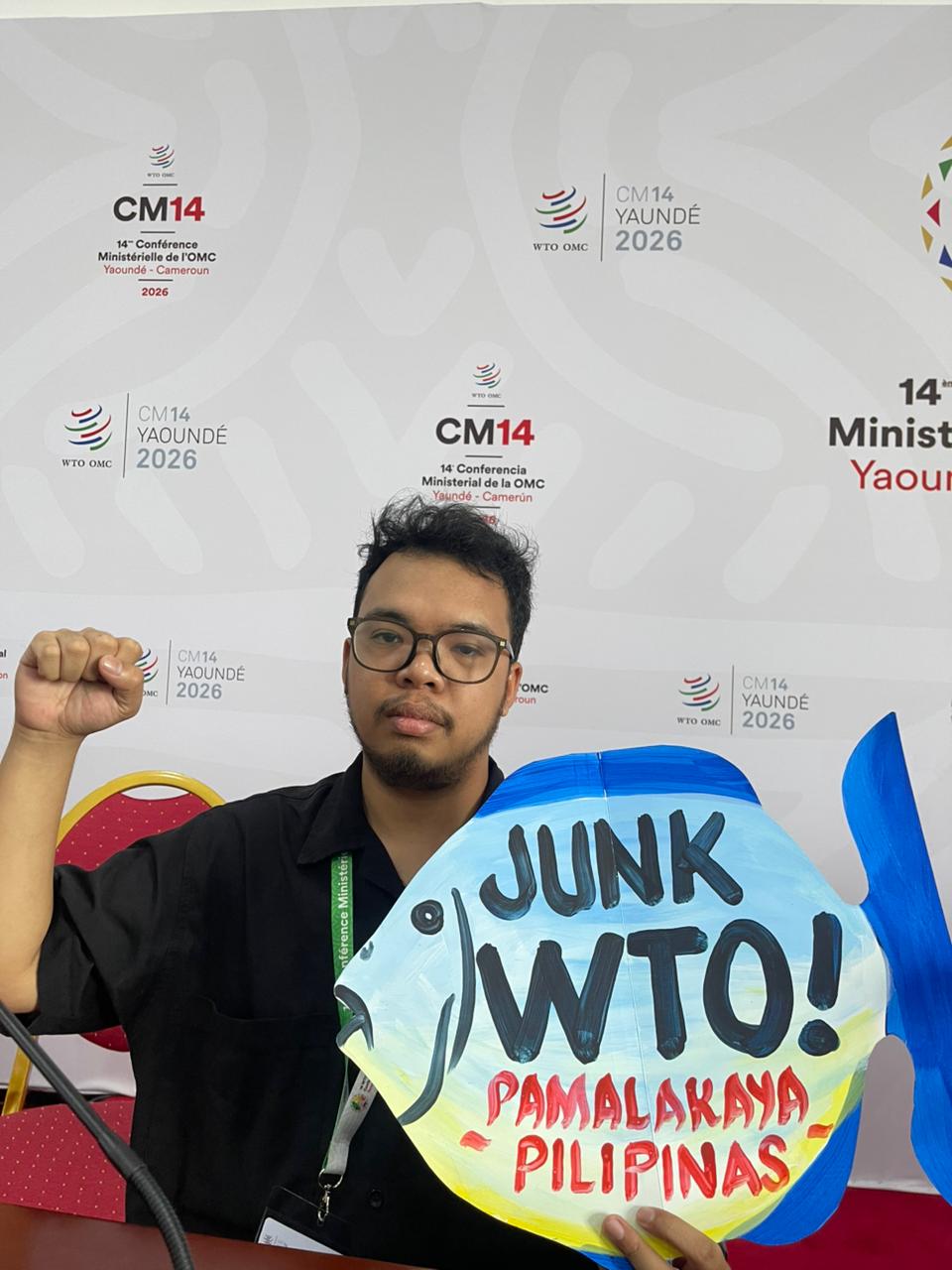
Terence Repelente, International Network Officer of the Pambansang Lakas ng Kilusang Mamamalakaya ng Pilipinas (PAMALAKAYA), has been one of the most consistent and passionate advocates for small-scale fisherfolk not only in the Philippines but across the global stage. As a proud member of the World Forum of Fisher People (WFFP), Repelente has dedicated years to amplifying the voices of traditional fishers who are too often sidelined in international trade negotiations.
His tireless efforts in exposing the potential dangers of the WTO agreement to marginalized fishing communities have earned him respect among fisher movements worldwide. Through persistent advocacy, sharp analysis, and unwavering solidarity, Repelente continues to challenge policies that prioritize corporate and industrial interests over the survival of small-scale and artisanal fishers. His work reminds us that genuine sustainability must begin with protecting the people who have cared for the seas for generations — not with rules written far from the fishing grounds where they struggle daily against rising fuel costs, declining catches, and powerful commercial fleets.
Repelente has been particularly vocal in warning that the agreement risks further weakening the already minimal government support available to traditional fisherfolk. “This deal will not solve the fundamental problems of overfishing and overcapacity,” he asserts. “Instead, it risks stripping away what little assistance traditional fishers still receive, while allowing large industrial fleets — which can operate without subsidies — to tighten their control over our waters.”
He strongly believes that fisheries matters should be handled by the Food and Agriculture Organization (FAO) of the United Nations, particularly its Committee on Fisheries (COFI), where small-scale fishers believe they have a better chance of being heard. “In the FAO, we at least have some space to engage,” Repelente notes. “In the WTO, the voices of traditional and small-scale fishers are completely excluded.”
Global Context and Lingering Concerns
Globally, the situation remains alarming. According to the FAO, the proportion of overfished stocks rose dramatically from 10 percent in 1974 to 35.5 percent in 2021. Harmful subsidies to marine fishing are estimated at around $22 billion annually out of a total $35 billion in fisheries subsidies, while illegal, unreported, and unregulated fishing causes economic losses of approximately $50 billion each year.
The WTO agreement includes a built-in sunset clause under Article 12: comprehensive disciplines on fisheries subsidies must be adopted within four years, or the entire agreement will lapse. However, Repelente and other fisher groups lament that the second phase of negotiations failed to deliver clear outcomes during the recent Ministerial Conference (MC14) in Cameroon.
As a result, the World Forum of Fisher People (WFFP), through leaders like Terence Repelente, has made it clear that they will continue to oppose the implementation of the agreement in countries where it threatens to harm small-scale and traditional fishing communities the most.
The Path Forward
The WTO Fisheries Subsidies Agreement may represent a step forward in global environmental governance, but for millions of small-scale fishers who depend on the oceans for their daily survival, it raises more questions than answers. True ocean sustainability cannot be achieved without centering the rights, knowledge, and livelihoods of traditional fisher peoples.
As Terence Repelente and the WFFP continue their struggle, they call for genuine participation of small-scale fishers in decision-making processes that affect their lives and the health of the marine ecosystems they have stewarded for generations.
The coming years will reveal whether this “historic” deal truly protects the oceans — or simply accelerates the marginalization of those who depend on them most.