
Gorkhi-Terelj, Tuv Province, Mongolia | 15–16 August 2026
The World Forum of Fisher Peoples (WFFP) was proud to participate in the World Pastoralist Assembly, held from 15–16 August 2026 in Gorkhi-Terelj, Tuv Province, Mongolia. This gathering, organised in the context of the International Year of Rangelands and Pastoralists (IYRP 2026) and ahead of UNCCD COP17, brought together Indigenous and traditional peoples from around the world to share experiences, build alliances, and advance collective struggles for land, water, and livelihood rights.
WFFP used this important platform to amplify the voices, experiences, and struggles of small-scale and artisanal fisher communities while deepening solidarity with pastoralist and mobile Indigenous peoples.
Presenting the World Forum of Fisher Peoples
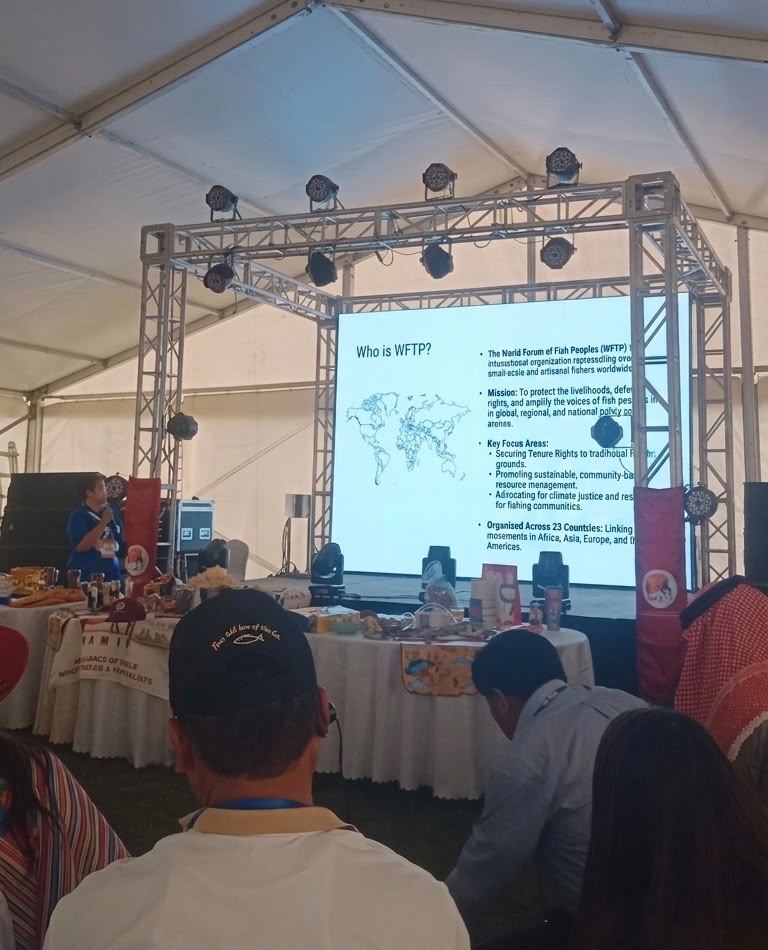
During the Assembly, WFFP representative “Kate Kesini” from Thailand delivered presentations that introduced the organisation to the pastoralist delegates. WFFP is a mass-based international social movement representing over 10 million small-scale and artisanal fishers across more than 20 countries in Africa, Asia, Europe, and the Americas.
The presentation outlined WFFP’s core mission: to protect the livelihoods of fisher peoples, defend their human rights, and amplify their voices in global, regional, and national policy arenas. Key focus areas highlighted included:
- Securing tenure rights to traditional fishing grounds
- Promoting sustainable, community-based resource management
- Advocating for climate justice and resilience for fishing communities
Here in this image above shows WFFP presentation on “Who is WFFP?” showing the organisation’s global presence and mission.
The Serious Challenges Faced by Fisher Peoples
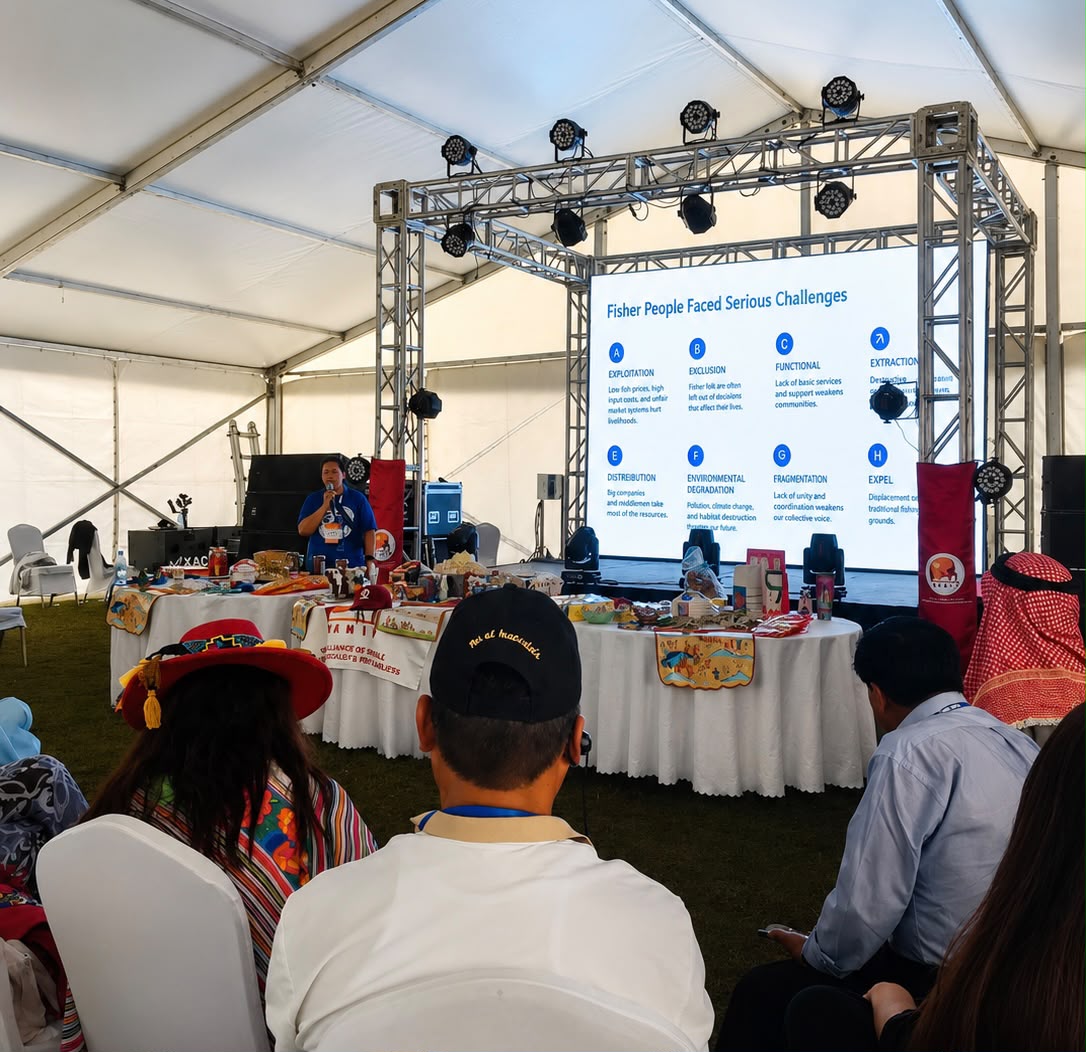
A second presentation focused on the serious challenges confronting fisher communities worldwide. These challenges were presented under clear categories that resonated strongly with pastoralist participants facing parallel pressures:
- Exploitation – Low fish prices, high input costs, and unfair market systems
- Exclusion – Fisher folk left out of decisions that affect their lives
- Functional gaps – Lack of basic services and support that weakens communities
- Extraction – Destructive industrial practices and resource grab
- Distribution – Big companies and middlemen capturing most of the value
- Environmental degradation – Pollution, climate change, and habitat destruction
- Fragmentation – Lack of unity and coordination that weakens collective voice
- Expulsion – Displacement from traditional fishing grounds

Building Resistance and the Fight Against Industrial Aquaculture
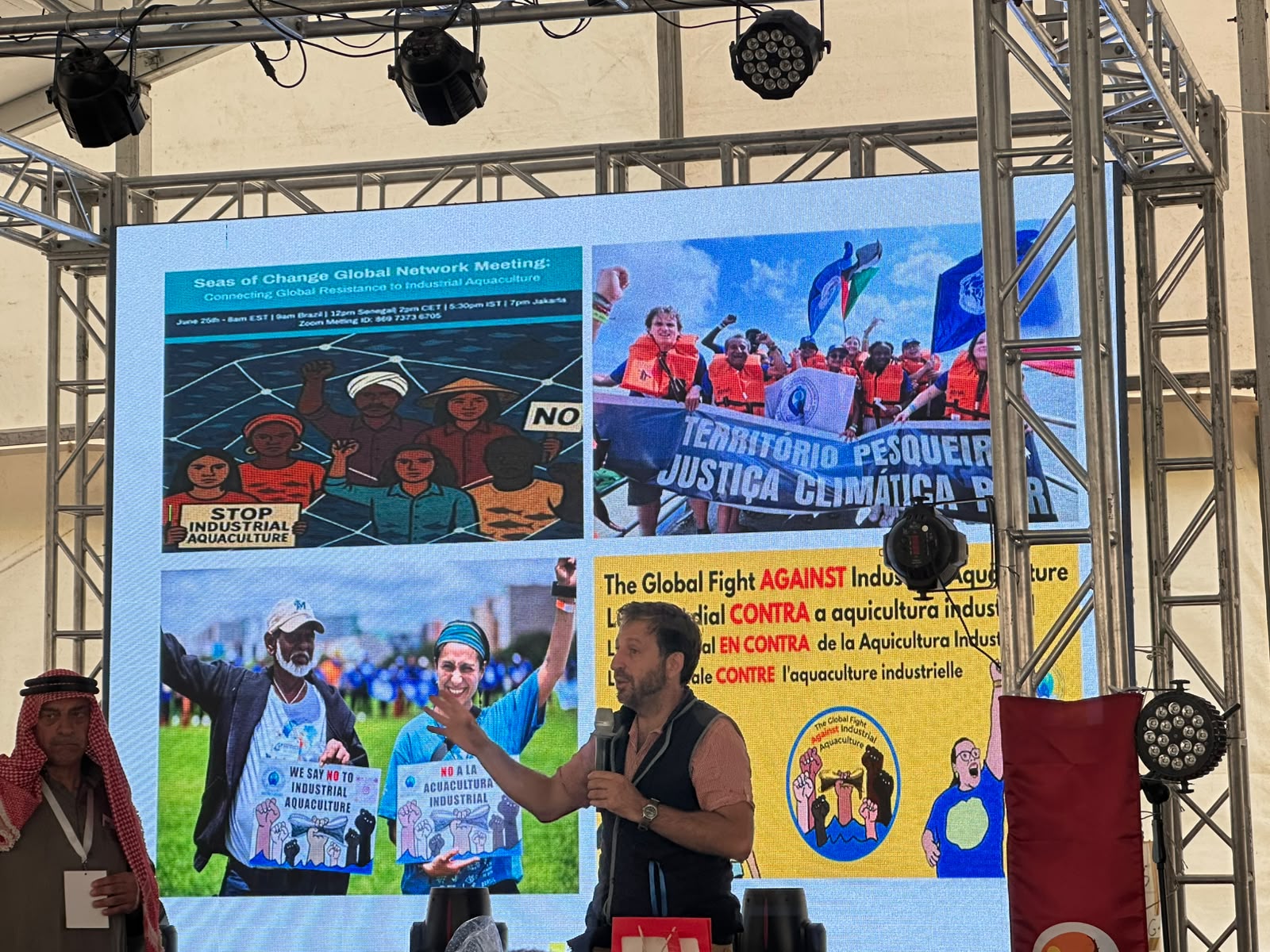
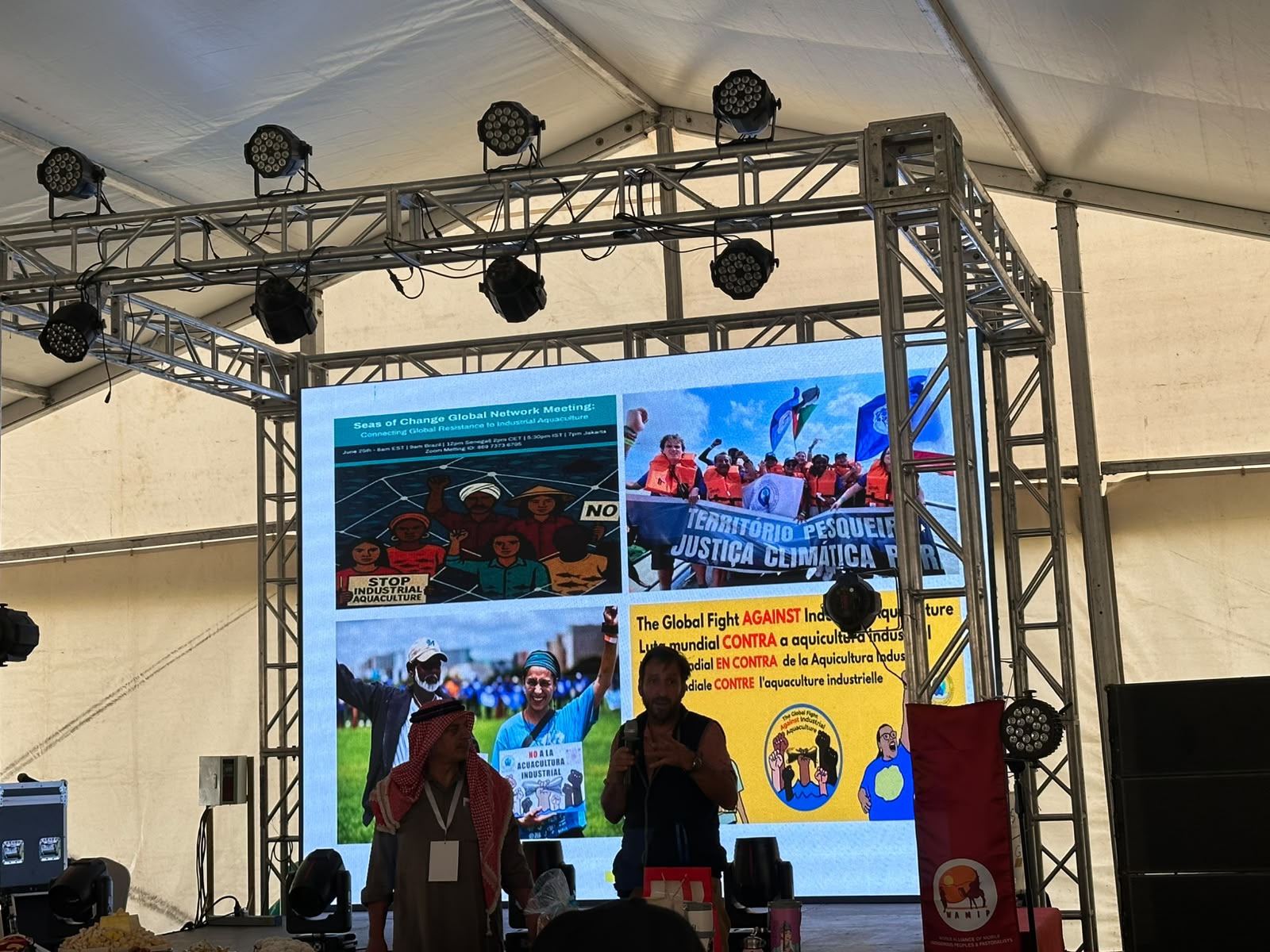
A significant part of WFFP’s contribution focused on the growing global resistance to industrial aquaculture. Through number of meetings WFFP and allied organisations are connecting struggles against industrial fish farming, which threatens traditional fishing territories, coastal ecosystems, and the food sovereignty of fisher communities.
Powerful images and messages from protests around the world were shared on screen, including banners reading “Stop Industrial Aquaculture,” “Território Pesqueiro – Justiça Climática,” and “We Say No to Industrial Aquaculture.”

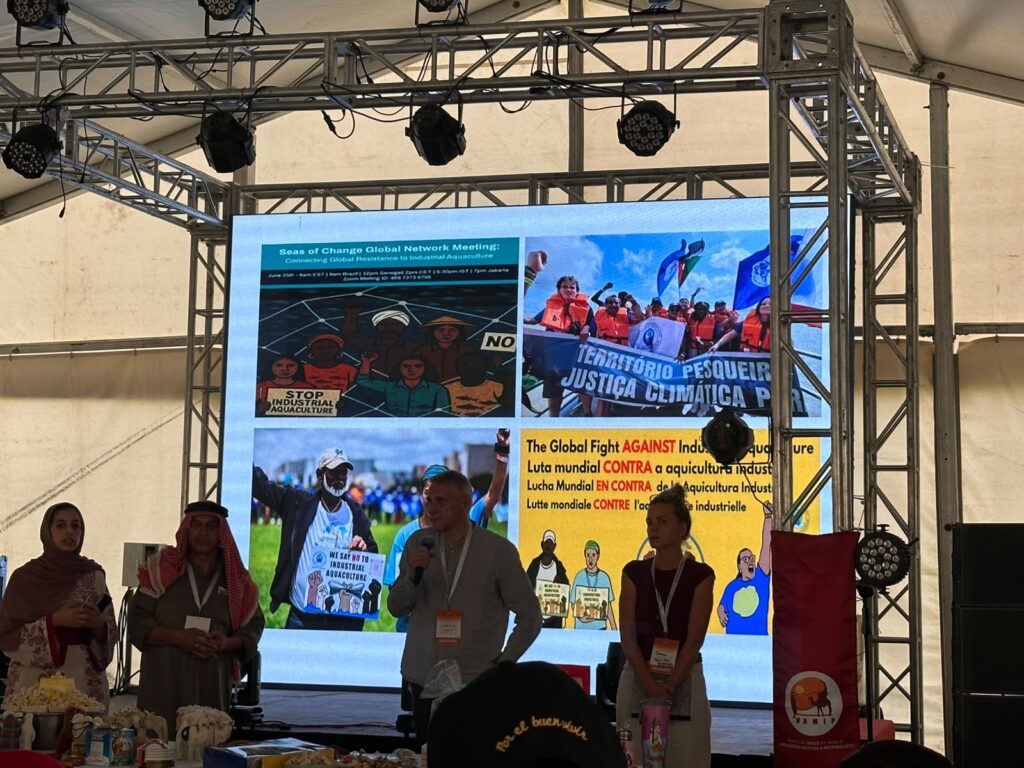
Presentations and panel discussion highlighting the global resistance to industrial aquaculture.
Strengthening Solidarity Among Indigenous and Traditional Peoples
The presence of WFFP at the World Pastoralist Assembly underscored a shared reality: small-scale fishers and pastoralists face similar threats from industrial expansion, land and ocean grabbing, climate change, and exclusion from decision-making spaces. Both communities are custodians of territories and traditional knowledge systems that sustain biodiversity and food sovereignty.
By sharing the lived experiences of fisher peoples and listening to the struggles of pastoralists, WFFP reaffirmed its commitment to building lasting solidarity among Indigenous and traditional peoples. The Assembly provided a valuable space to exchange strategies, strengthen networks, and prepare joint advocacy ahead of major international processes, including UNCCD COP17.
WFFP extends its gratitude to the organisers of the World Pastoralist Assembly and to all pastoralist brothers and sisters who welcomed the voices of fisher peoples. Together, we continue the struggle for rights, dignity, and a future in which traditional communities can thrive in harmony with nature.