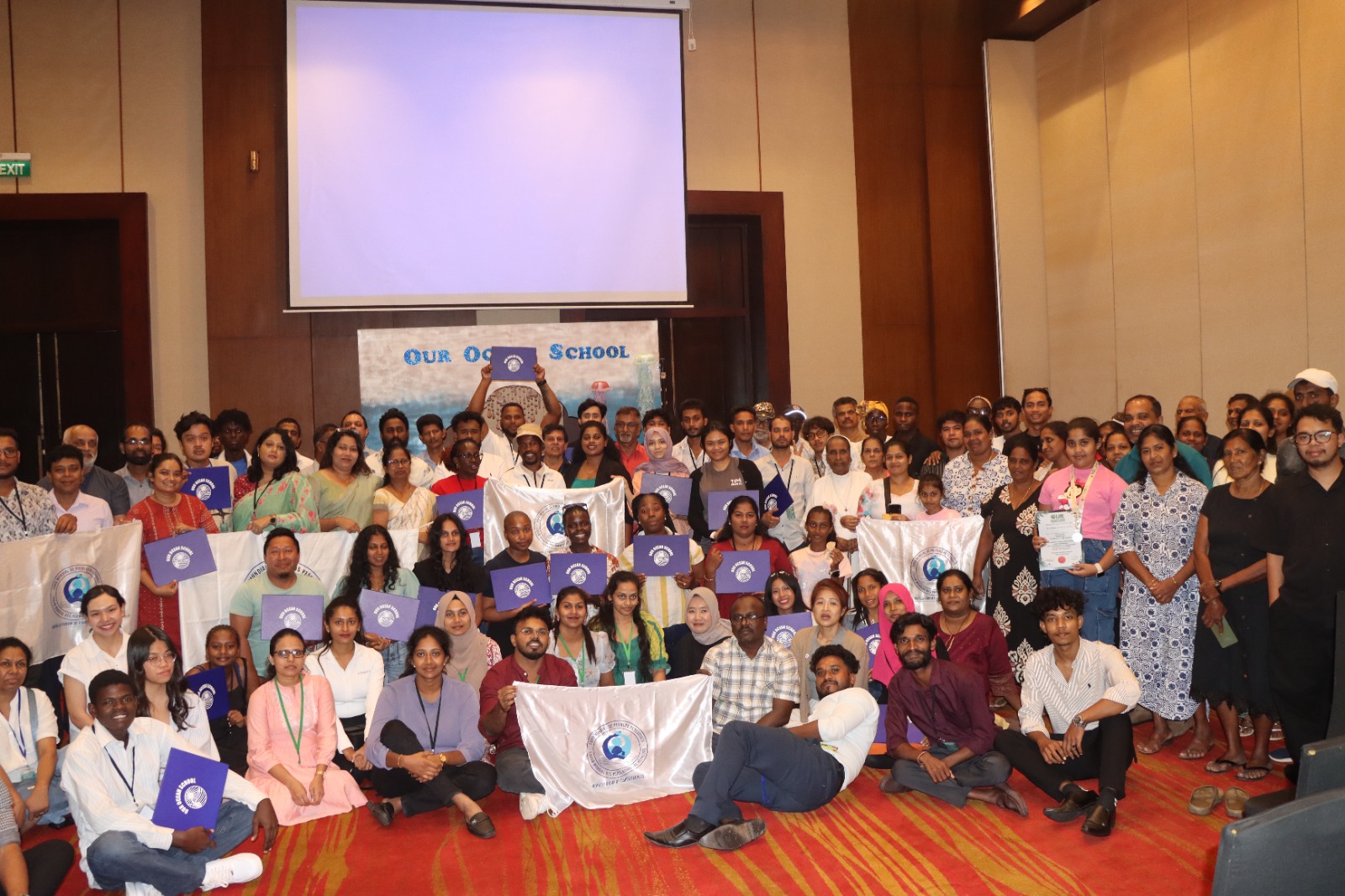
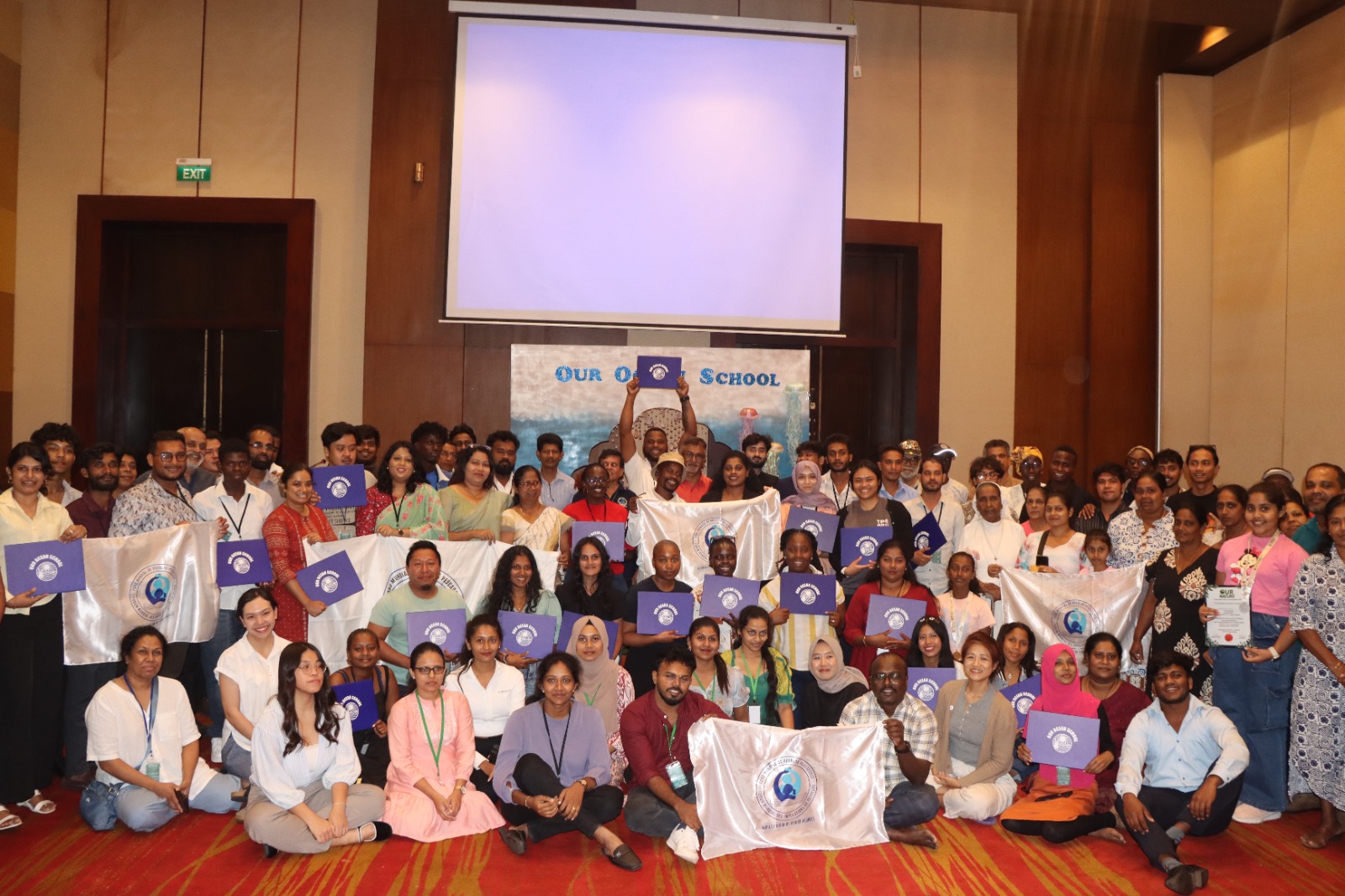
From 12 to 15 August 2026, the World Forum Of Fisher Peoples ( WFFP ), in close collaboration with the National Fisheries Solidarity Movement ( NAFSO ) Sri lanka, successfully conducted the inaugural Training of Trainers (TOT) programme of “Our Ocean School” on Aqua Ecology in Negombo. This landmark international gathering brought together youth leaders and participants from WFFP member countries and partners, marking a significant milestone in advancing ecological, rights-based approaches to aquatic food systems and food sovereignty.
The programme built directly on the foundations laid earlier in 2026. Our Ocean School was officially inaugurated on 8 June 2026, following an introductory programme on Aqua Ecology and Agroecology held at NAFSO premises on 6 February 2026. These earlier initiatives underscored the urgent need for a distinct aqua-ecology framework that recognises traditional capture fisheries as the sustainable procurement of resources from nature, distinct from farming or industrial aquaculture, while integrating traditional ecological knowledge, community stewardship, human rights, gender justice, and youth leadership.
A Rights-Based, Ecological Learning Framework
Aqua Ecology, as advanced by NAFSO and WFFP, is a holistic, community-centred approach that treats water bodies, rivers, tanks, wetlands, lagoons, coastal waters, mangroves, coral reefs, seagrass beds, and related ecosystems as interconnected ecological systems, biodiversity hotspots, food commons, cultural spaces, and foundations of livelihood. It prioritises low-impact fishing practices, protection of aquatic ecosystems, recognition of customary tenure rights, and democratic control by small-scale fishers, women, and youth over the resources that sustain them.
The TOT curriculum was designed as a human rights-based, ecological, and people-centred learning framework grounded in Sri Lankan realities and traditional knowledge systems. It integrates Aqua Ecology with Agroecology, emphasising that healthy ecosystems, clean water, and protected rights are prerequisites for nutritious food and food sovereignty. Key themes included understanding whole ecosystems and their interconnections as well as threats from industrialisation, overfishing, industrial aquaculture, pollution, ocean grabbing, and extractive developments while discussing the critical role of mangroves, coral reefs, and traditional tank cascade systems highlighting the importance of gender equity and youth leadership, participatory tools such as ecosystem mapping, legal literacy, and community advocacy and pathways toward food sovereignty through community stewardship and rights based governance. The programme aligns strongly with SDG 14b and broader efforts to defend the rights and livelihoods of small-scale fisher peoples worldwide.
International Participation and Shared Commitment
The TOT brought together registered youth participants from multiple WFFP member and partner countries, including Bangladesh, Belize, Ecuador, India, Indonesia, Kenya, the Philippines, St. Lucia, Senegal, South Africa, Trinidad and Tobago, Thailand, and Uganda, alongside participants from Sri Lanka. This diverse gathering of approximately 50 individuals (including the host country’s contingent) reflected the global reach of WFFP and the shared determination of fisher peoples’ movements to build capacity across regions facing common challenges of climate change, resource enclosure, and industrial pressures on aquatic commons.
The four-day programme combined theoretical sessions on the principles and practical application of Aqua Ecology with opportunities for cross-cultural exchange and experiential learning through the field visits of Negombo, Galle and Kurunegala where participants explored for local traditional marine fishing communities and their techniques , inland traditional tank fishing and lagoon fishing. This particular international TOT programme, which featured structured learning modules, interactive discussions, field-based observation of coastal and lagoon ecosystems, and cultural activities that strengthened solidarity among participants, provided not only a rich learning experience but also created unforgettable memories for every participant. These elements allow future trainers to internalise both the conceptual framework and the lived realities of fishing communities, preparing them to cascade knowledge within their own national and regional movements.
Celebrating the Commitment of WFFP and NAFSO
This TOT stands as a powerful demonstration of the sustained commitment of WFFP and NAFSO to the Our Ocean School concept. This whole program was made possible by the guidance of Mr. Herman Kumara (WFFP General Secretary and NAFSO Convener) as well as by the leadership of Co – chair Nadine Nembhard and Co – chair Daouda ndiyaye. This program recognises that lasting solutions to the crises facing small-scale fisheries cannot be imposed from above; they must be rooted in the knowledge, rights, and leadership of fishing communities themselves—especially youth and women. By investing in a dedicated educational platform, WFFP and NAFSO are equipping a new generation of trainees who will carry Aqua Ecology principles and values into coastal, lagoon, and inland communities across the Globe. The approach rejects extractive, export-oriented models in favour of regenerative practices that protect ecosystems, secure tenure, uphold human rights, and strengthen local food systems. It affirms that traditional fishers are not merely resource users but skilled stewards whose knowledge is essential for ecological resilience and food sovereignty.
Looking Ahead expanding the Movement
The successful completion of this first international TOT opens the door to further expansion. NAFSO, through WFFP, intends to develop and offer additional training opportunities to participants from member countries, incorporating ongoing research and grounded experiences from diverse contexts. The long-term vision is clear ; to transform Aqua Ecology from an emerging concept into a lived practice that empowers communities, defends territories, and builds resilient, equitable aquatic food systems for generations to come. WFFP leadership congratulates all participants, facilitators, and the NAFSO team on this achievement. The Our Ocean School TOT on Aqua Ecology in Negombo represents more than a training event, it is a concrete step toward a future in which small scale fisher peoples remain sovereign stewards of the waters that sustain life, culture, and dignity. The work continues, grounded in solidarity, ecological wisdom, and the unwavering commitment of the global fisher peoples’ movement.