
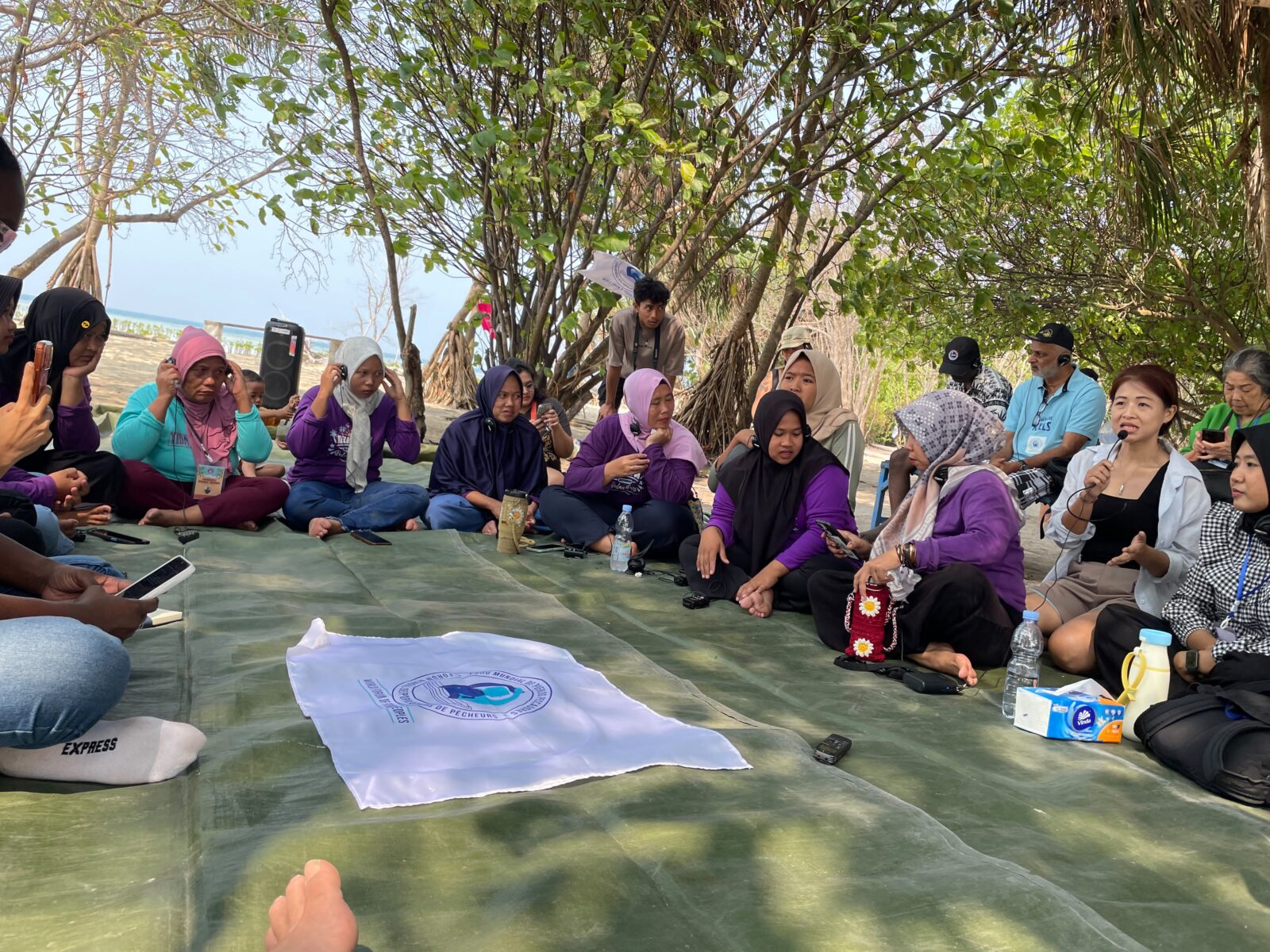
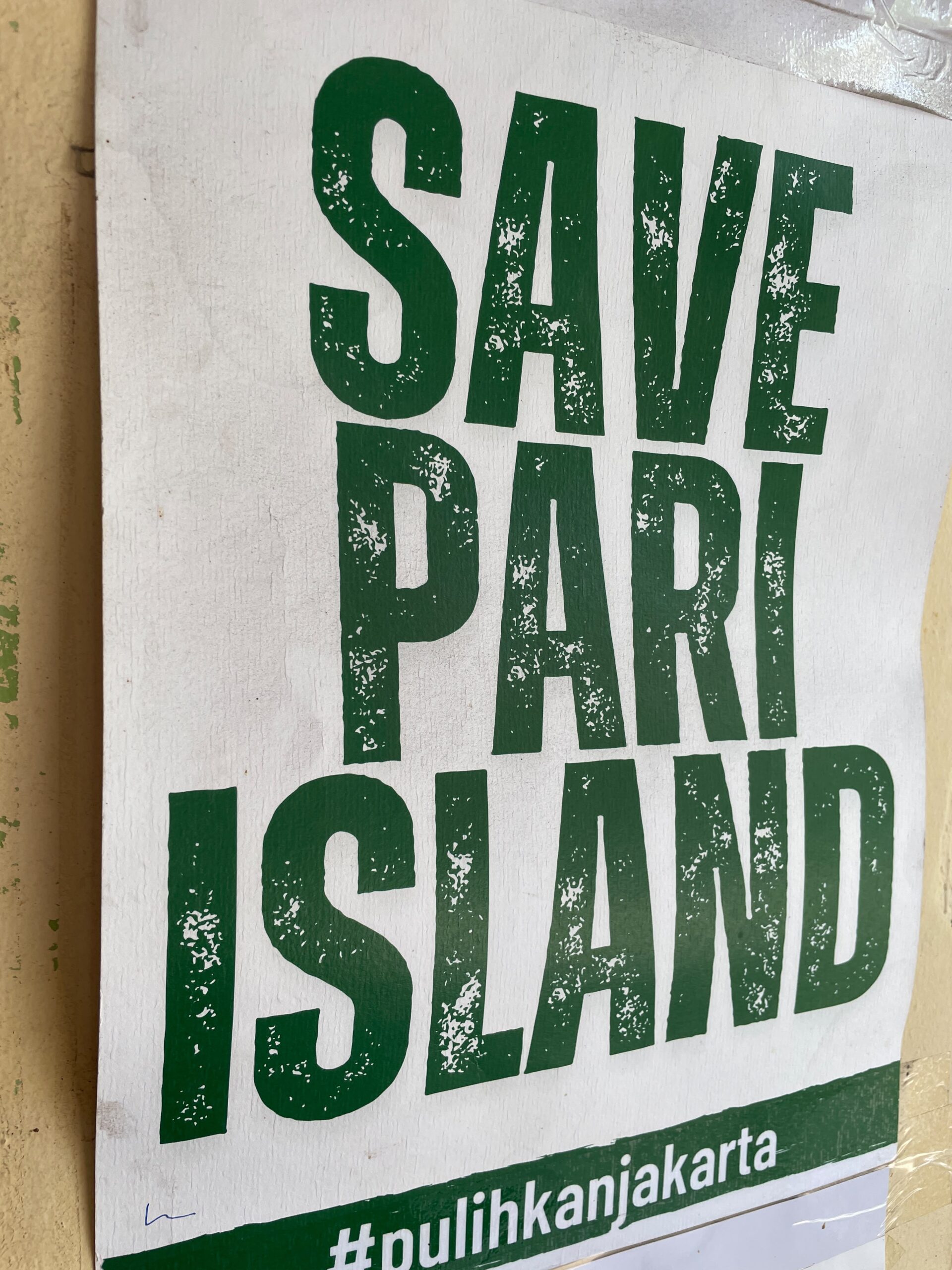
On a small island in the waters near Jakarta, a group of women are fighting a quiet but determined battle. They are fishers first people whose lives are tied to the sea, the tides, and the narrow stretch of coast that has sustained their families for generations. Yet today the women of Pari Island find themselves defending far more than their catch. They are defending their homes, their right to work, and the very ground beneath their feet. For years the community has faced a powerful claim over much of the island by a large company. Residents say they have been pushed into repeated court appearances in Jakarta while feeling that official authorities often align with corporate interests rather than with the people who have lived and fished there longest. The pressure is constant. Court notices arrive regularly. Uncertainty hangs over whether the places they call home will still be recognized as theirs. In response, the women have organized. In 2026 they formed a human barricade near the beach and homestays to protect their community space. They report that the confrontation turned physical. Police presence has become so frequent that residents developed a simple bamboo warning system so neighbors can alert one another and stay safe. Even under these conditions, the women refuse to step back.
Building What They Need Themselves
Rather than wait for outside solutions, the fisherwomen of Pari have taken practical action with their own hands. Using traditional knowledge and collective labor, they have cleared and maintained beach areas without expensive equipment or external funding. They have created small farming plots that grow coconuts and vegetables alongside their fishing work. They continue to identify first and foremost as fisherfolk, even as they expand their sources of food and income. One of their most striking achievements is environmental. The women planted roughly 40,000 mangrove seedlings to fight coastal erosion. Many of those young trees, they say, were later cut down to make way for floating cottage developments. Still the effort stands as proof of their capacity to manage and care for the landscape they depend on. They have also built simple but useful facilities on the beach toilets and small shelters partly supported by a community donation box. Tourism activities such as homestays, guiding, snorkeling, and catering have grown, yet the women are clear. Tourism is only one part of their livelihood. The sea and the work of fishing remain central to who they are.
To strengthen mutual support, the women established a cooperative. Though it has not yet been fully formalized under the law, the cooperative already provides small loans so members can meet urgent needs without turning to high interest lenders. During the two years when the COVID-19 pandemic halted tourism, the women kept working at sea and developed alternative food sources. Limited philanthropic help arrived in the form of basic necessities and support for planting, but the core of the effort remained local.
Personal Courage Behind the Collective Fight
The larger struggle is made of individual stories of quiet bravery. One woman joined the human barricade while nine months pregnant with her second child. Despite fear, she stood with the others. Later she traveled to Sri Lanka on an invitation linked to the women’s movement which was her first journey by airplane. Another woman was injured during the same barricade and still feels uneasy leaving her home. While pregnant she traveled to Jakarta for court matters; her husband was detained by police and did not return when expected. She credits the steady support of other women with helping her keep going. These experiences have not broken the group’s resolve. They have deepened it.
The Wider Fight for Recognition
The women seek formal legal recognition of their land and coastal space. They note that many coastal communities across Indonesia face similar problems because long-term residents often lack official land titles. Information about pathways to recognition after years of occupation has not reached them adequately. They also raise concerns about how official maps treat the marine areas that matter most to fishers the twelve-nautical-mile zone and the coral reefs that sustain their catch. Advocacy groups such as KIARA have supported the community with legal assistance and have reported alleged violence against women to the National Commission on Violence Against Women. Recommendations from the Commission, however, have not always translated into practical protection. After setbacks in court, including a dispute linked to island reclamation that the community associates with environmental damage, the women adjusted their strategy. Greater emphasis is now placed on the cooperative as a foundation of resilience and shared hope.
A Continuing Stand
Despite years of pressure, legal uncertainty, and community divisions, some residents have sold stalls to the company and stepped away from the struggle, the women of Pari Island continue. They organize. They farm. They fish. They plant. They lend to one another. They support families. And they defend the territory that has always been theirs.
Their message is straightforward and powerful. Women are fully capable of managing and developing their community. The evidence is visible in the mangroves they planted, the beach facilities they built, the cooperative they sustain, and the daily determination they show. On Pari Island the struggle is not only about land or livelihoods. It is about the right of a fishing community and especially its women to remain on the island they know, to work the waters they understand, and to decide their own future.