
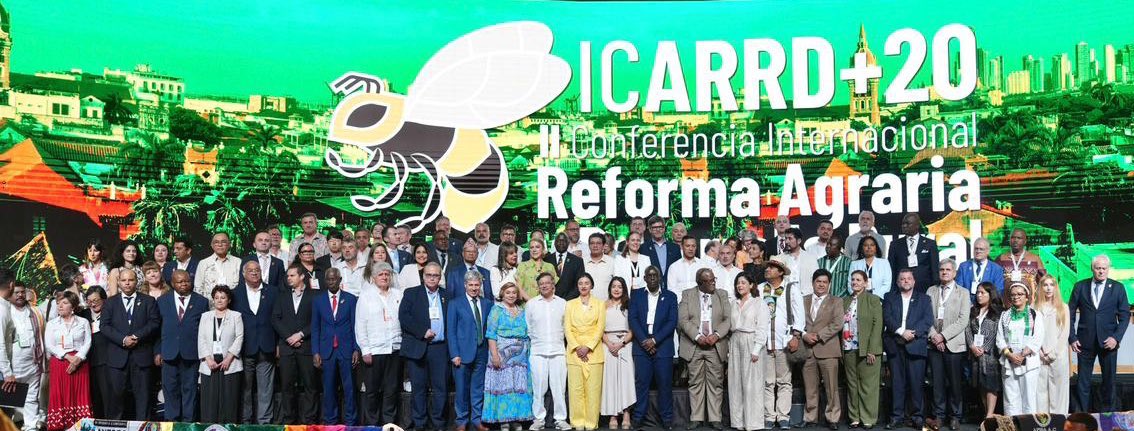
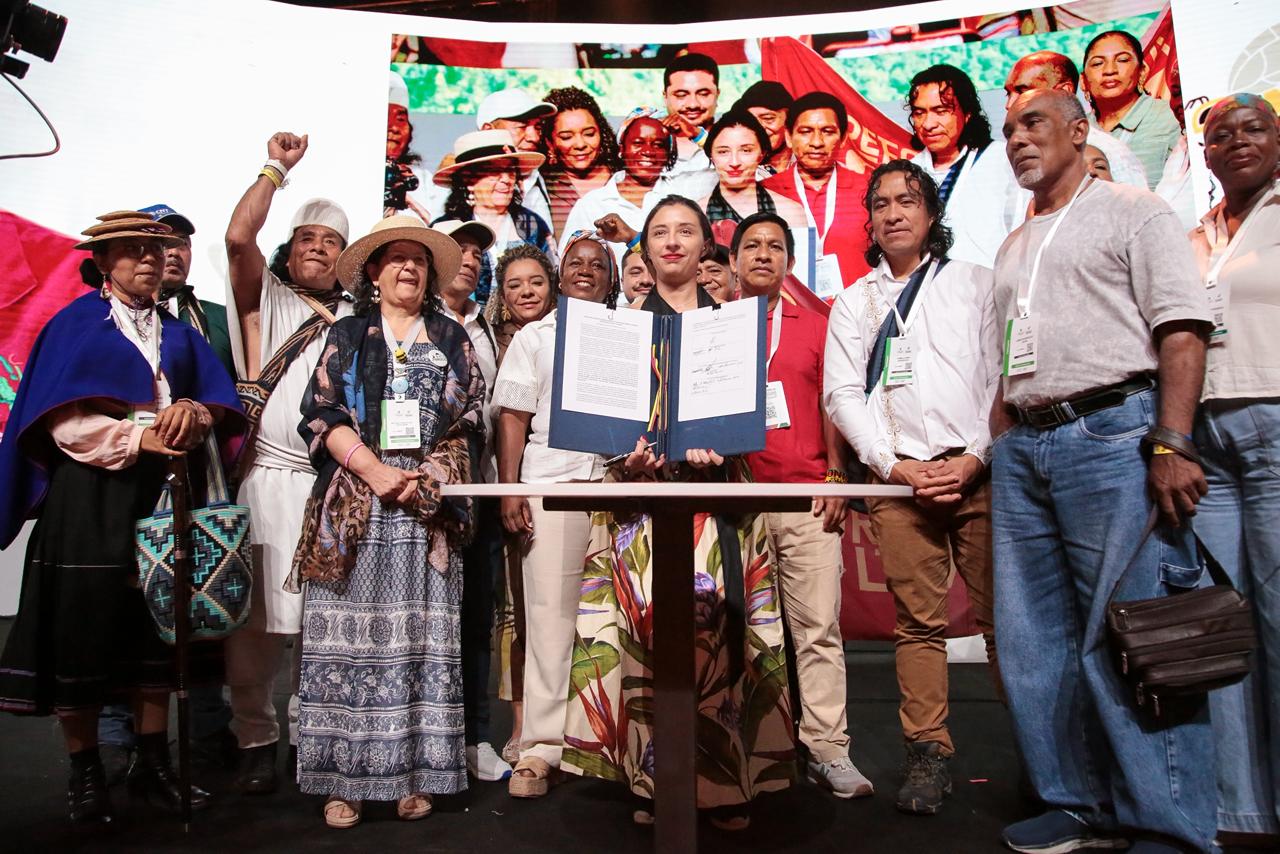
In a powerful display of global unity, representatives from Indigenous Peoples, peasants, fisherfolk, and other rural communities gathered at the ICARRD+20 conference to champion the cause of agrarian reform. As the World Forum of Fisher Peoples (WFFP), we join our allies in expressing gratitude to the governments of Colombia and Brazil for revitalizing this critical discussion on the international stage and ensuring that the voices of grassroots movements are heard. This event marks a vital step toward addressing long-standing inequalities in access to land, water, and resources, but it also underscores the urgent need for stronger protections of our collective rights.
At the heart of the conference was a reaffirmation of the unbreakable solidarity among Global South nations and peoples. We stand firm in defending international law and human rights against any form of aggression, including the ongoing challenges faced by countries like Iran amid external pressures. The WFFP echoes the call for unity, recognizing that threats to one community’s sovereignty ripple across oceans and borders, directly impacting the livelihoods of fisher peoples worldwide.
Download the pdf
Our commitment is rooted in established international frameworks that safeguard the rights of Indigenous Peoples and rural workers. Instruments such as the United Nations Declaration on the Rights of Indigenous Peoples (UNDRIP) and the United Nations Declaration on the Rights of Peasants and Other People Working in Rural Areas (UNDROP) provide clear legal recognition of these rights. The WFFP firmly opposes any efforts to dilute or undermine these protections, which are essential for preserving our traditional fishing grounds, coastal territories, and sustainable practices.
A key issue highlighted during the closing ceremony was the problematic blurring of lines between Indigenous Peoples and the ambiguous term “local communities” in the governments’ final declaration. This repeated conflation risks eroding the distinct legal status and unique histories of Indigenous groups, as articulated by organizations like the International Indian Treaty Council (IITC) within the broader International Planning Committee for Food Sovereignty (IPC). For fisher peoples, nomadic pastoralists, peasants, and other mobile communities, this oversight is particularly alarming. Our rights to territorial access, mobility across waters, and sustainable resource management must be explicitly acknowledged and upheld, not subsumed under vague categories that could weaken our claims.
While we value the platform provided by ICARRD+20, the WFFP aligns with our partners in rejecting the conference’s concluding declaration. It falls short of addressing the full spectrum of our needs and fails to honor the hard-won advancements in human rights. Moving forward, we pledge to actively participate in follow-up initiatives, advocating tirelessly to ensure that the rights of all affected communities are not just recognized but fully implemented and protected.
ICARRD20_Final-Political-Declaration_
Download the pdf
Looking ahead, the WFFP envisions a transformative agrarian reform for the 21st century—one that inclusively embraces Indigenous Peoples, peasants, fisherfolk, pastoralists, women, youth, gender-diverse individuals and rural labourers. True reform extends far beyond mere land distribution; it must encompass vital ecosystems like oceans, rivers, forests, grazing areas, and migratory pathways that sustain our ways of life. We advocate for a holistic approach built on four interconnected pillars: Redistribution of resources, Recognition of traditional rights, Restitution for historical injustices, and Regulation to prevent exploitation.
Central to this vision are the principles of food sovereignty and agroecology, which empower communities to control their own food systems and promote environmentally sound practices. For fisher peoples, this means securing access to marine resources, combating industrial overfishing, and integrating traditional knowledge into global policies. Our strategy for achieving this is detailed in the IPC’s position paper released prior to ICARRD+20, which outlines actionable steps toward a just and equitable future.
As WFFP, we remain committed to this struggle, amplifying the voices of small-scale fishers and coastal communities worldwide. Together with our allies, we will continue to push for reforms that honor our rights, protect our environments, and build resilient food systems for generations to come.
Join us in this movement—solidarity is our greatest strength…