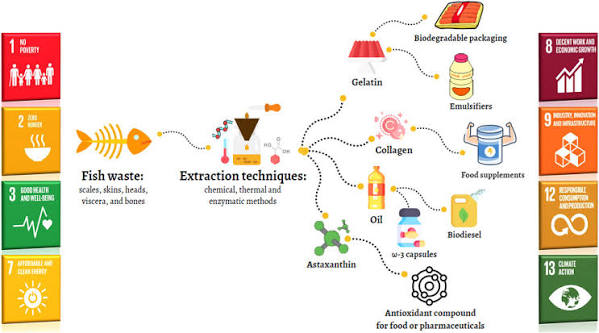
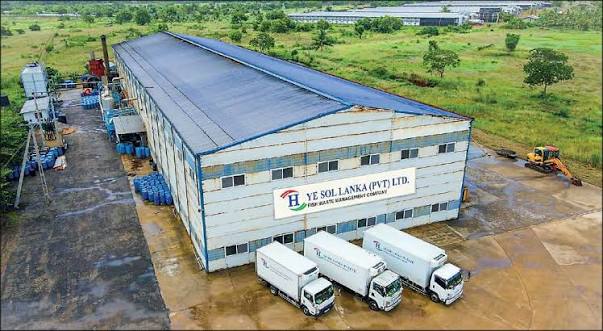
For decades, fish heads, frames, viscera, and skins piled up at markets and landing sites across Sri Lanka as an unwanted environmental burden. Today, that same stream of material is being transformed into valuable animal feed ingredients that earn foreign exchange, create jobs, and deliver cleaner coastlines. The story of Yesol Lanka, a Board of Investment (BOI)-approved enterprise in Madurankuliya, Puttalam, shows how fish-waste valorization can deliver real benefits for fisher peoples, coastal environments, and national economies. Founded by entrepreneur Vijitha Kumara Rajapaksa, who gained practical expertise in fish-waste processing while working with South Korea’s Hantech Group, Yesol Lanka introduced technology that converts discarded fish parts into fish meal, fish oil, and fish paste. The BOI approved the project because it addresses four clear priorities: reducing a growing environmental problem, generating foreign exchange, creating employment, and providing fishermen and collectors with a new source of income.
The company operates on a 50-acre site with a US$3 million investment. It employs 45 people directly and has the capacity to process up to 100 metric tons of fish waste per day. Fishermen and collectors now receive Rs. 20–30 per kilogram for material that previously had no market value and was often discarded at a cost. Yesol Lanka exports 30,000–35,000 metric tons of products annually, earning US$2–2.5 million in foreign exchange. Clients include major players such as Vietnam’s CP Company, a global leader in shrimp farming. The enterprise has also achieved 100% Green Project status through the use of recyclable packaging. These results matter far beyond one factory. Sri Lanka currently processes less than 3% of its total fish catch into marine ingredients, even though annual landings reach 480,000–530,000 metric tons. Globally, the fishmeal and fish oil market is valued at approximately US$9.9 billion in 2026 and is projected to reach US$19.1 billion by 2036. The broader aquafeed market is expected to grow from US$67.7 billion in 2026 to US$97.1 billion by 2031, with the Asia-Pacific region already accounting for more than 42% of consumption. Projects like Yesol Lanka position coastal communities to capture a greater share of this expanding market while reducing the environmental load on the very waters that sustain small-scale fisheries.
Why such recycling projects are important
Fish-waste recycling strengthens the livelihoods of fisher peoples by turning a cost into an income stream. What was once discarded now generates steady payments for collectors and fishers, adding resilience to household economies that often face seasonal fluctuations and rising operational costs. These initiatives reduce coastal pollution. Discarded organic waste contributes to foul odours, water contamination, and pressure on nearshore ecosystems. Diverting that material into productive use helps keep landing sites, markets, and adjacent waters cleaner—conditions that directly support the health of the marine and coastal environments on which small-scale fishers depend.
They create local employment and demonstrate circular-economy principles in action. Processing facilities generate direct jobs and stimulate related activity in collection, transport, and logistics. By converting an environmental liability into export-earning products, such ventures illustrate practical pathways toward more sustainable resource use. They expand the value chain for the entire catch. When by-products find reliable markets, the overall economic return from fishing improves without requiring increased fishing effort. This aligns with the broader goal of making better use of what is already harvested.
The BOI has highlighted Yesol Lanka as a model for turning environmental challenges into opportunities that generate foreign exchange and promote sustainability. Entrepreneur Vijitha Kumara Rajapaksa has encouraged Sri Lanka’s youth to pursue innovative, export-oriented ventures of this kind, while the BOI continues to welcome similar circular-economy investments. For organisations and communities committed to the well-being of fisher peoples, projects that convert waste into income, clean up coastlines, and create dignified work deserve attention and support. They show that practical, technology-enabled solutions can strengthen local livelihoods while contributing to healthier marine environments and national economic resilience. Scaling responsible fish-waste valorization across coastal regions offers one concrete way to ensure that more of the value from the sea stays with the people who harvest it.
The World Forum of Fisher Peoples (WFFP) appreciates and welcomes fish-waste recycling and valorization efforts such as this, particularly when they create additional income and cleaner environments for small-scale fisher communities. WFFP stands in support of similar initiatives driven by or benefiting small-scale fisher peoples worldwide that strengthen sustainable livelihoods, reduce environmental burdens on coastal and marine ecosystems, and keep more value within fishing communities.