
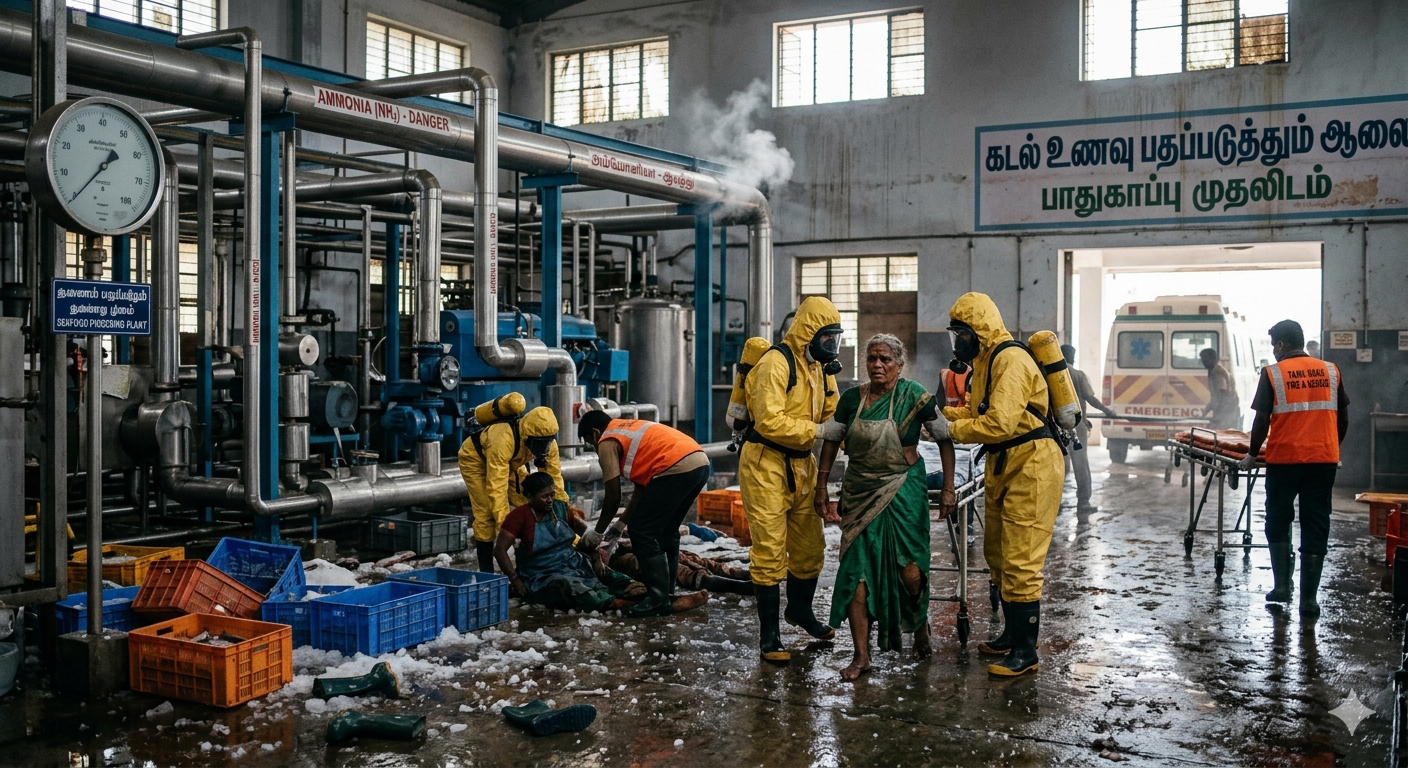
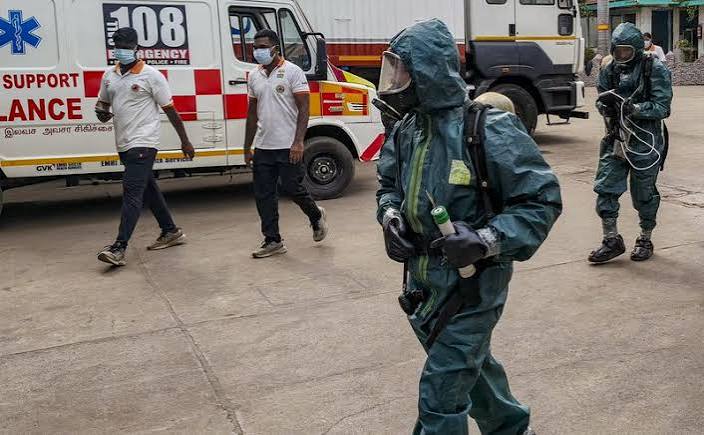
On 21 June 2026, a catastrophic ammonia gas leak struck a private seafood processing and export facility in the Kannigaipair/Manjangaranai area near Periyapalayam in Tamil Nadu’s Tiruvallur district. The incident at M/s Peter & Paul Seafood Exports Pvt Ltd (also referred to as St. Peter’s Paul Seafoods Exports) claimed the lives of at least seven workers — with reports indicating the toll rose from initial figures of two — and left over 60 others hospitalized, many in critical condition on ventilators.
Most victims were migrant women labourers from Odisha, Assam, Jharkhand and other states, part of the roughly 120 workers staying on the premises during a weekly holiday. The leak originated from the plant’s refrigeration and processing systems during routine operations, releasing toxic ammonia fumes that caused severe respiratory distress, eye irritation, coughing, chest discomfort and pulmonary complications. Emergency teams, including the National Disaster Response Force’s specialised CBRN unit, responded swiftly, but the human cost was devastating.
Chief Minister C. Joseph Vijay ordered a high-level three-member inquiry committee and announced immediate relief, including ₹2 lakh ex-gratia to families of the deceased and government assistance for transporting bodies. The company owner and manager were arrested on charges including culpable homicide. Health authorities continue monitoring survivors for delayed complications while calling for occupational safety audits across similar facilities.
The Deadly Reality of Ammonia in Seafood Processing
Ammonia (NH₃) remains a widely used industrial refrigerant in seafood cold storages and processing plants because it is efficient and cost-effective for freezing shrimp, fish and other products destined for export. However, it is highly toxic and corrosive. Even moderate exposure irritates the eyes, skin and respiratory tract, high concentrations trigger chemical burns to lung tissue and rapid death. Leaks often stem from aging equipment, inadequate maintenance, missing or faulty detection systems, poor emergency protocols and insufficient worker training — all preventable failures.
This tragedy is not isolated. Tamil Nadu and other Indian states with large seafood export hubs have seen recurring incidents involving ammonia and other hazardous substances in processing units. The pattern reveals systemic weaknesses in an industry that handles perishable, high-volume products under tight global market deadlines.
From the Perspective of Fisher Communities Worldwide
Small-scale and artisanal fisher communities — the backbone of sustainable seafood supply in India, Southeast Asia, Africa, Latin America and beyond — are deeply connected to this tragedy. Fishers harvest the catch that feeds export-oriented processing plants like the one in Tiruvallur. Many processing workers come from fishing families or rural coastal and riverine communities, migrating seasonally or long-term for work. When a breadwinner dies or is permanently disabled, entire households and villages suffer economic ruin, loss of knowledge transmission and deepened poverty.
The global seafood trade — driven by demand in wealthy markets for cheap frozen shrimp and fish — creates intense pressure on the entire value chain. Cost-cutting at the processing stage often translates into compromised safety for the most vulnerable migrant women workers living in on-site dormitories with limited bargaining power. Fisher peoples worldwide already face existential threats from industrial overfishing, climate-driven stock shifts, pollution from aquaculture and processing effluents, land grabs and exclusionary policies. This ammonia leak adds a brutal occupational dimension: the very infrastructure that processes their catch can become a death trap.
World Forum of Fisher Peoples (WFFP) member organisations have long documented how industrialisation of the seafood sector externalises risks onto workers and communities while concentrating profits upstream. Women in fisheries — whether at sea, in processing or in post-harvest activities — bear disproportionate burdens. Migrant labour regimes often strip people of basic protections. When disasters strike, families receive inadequate compensation, and systemic reforms remain slow.
A Call for Accountability and Systemic Change
WFFP extends heartfelt condolences to the families of those who lost their lives, and stands in solidarity with the injured workers and their communities. We demand:
- A fully transparent, independent investigation with public findings, beyond the ongoing official probe.
- Full compensation, lifelong medical care, rehabilitation and livelihood support for survivors and bereaved families.
- Immediate, mandatory safety audits and upgrades in all seafood processing facilities using hazardous refrigerants — including leak detection, emergency shutdown systems, worker training, personal protective equipment and safe on-site accommodation.
- Accelerated transition to safer, non-toxic or lower-risk refrigerants and technologies across the cold chain.
- Strong enforcement of labour rights, especially for migrant and women workers: freedom of association, fair wages, safe working and living conditions, and an end to exploitative dormitory systems.
- Global standards for occupational health and safety throughout the fisheries and seafood value chain, aligned with ILO conventions and FAO guidelines on responsible fisheries and decent work.
Consumer countries and retailers that profit from Indian seafood exports share responsibility. They must insist on verifiable safety and labour standards, not just traceability for sustainability labels. Governments everywhere must treat worker safety in food processing with the same urgency as food safety for consumers.
The lives of those who catch and process seafood are not disposable. This preventable tragedy in Tamil Nadu is a painful reminder that the industrial model of seafood production endangers people at every stage — from the sea to the plate. Fisher communities worldwide will continue to resist exploitation and demand a just transition. A transition that values human dignity, protects the environment and ensures that the benefits of the ocean’s bounty reach those who sustain it.
( Sources for factual reporting include official statements and on-ground reporting from The Hindu, The New Indian Express, indian state health bulletins and government announcements as of 22 June 2026 )
WFFP calls on all stakeholders — governments, industry, unions and civil society — to act decisively. Another life lost to an ammonia leak or similar industrial hazard is one too many. The time for half-measures has long passed. WFFP will continue monitoring the investigation and supporting affected communities.