February 6, 2026 – Negombo, Sri Lanka
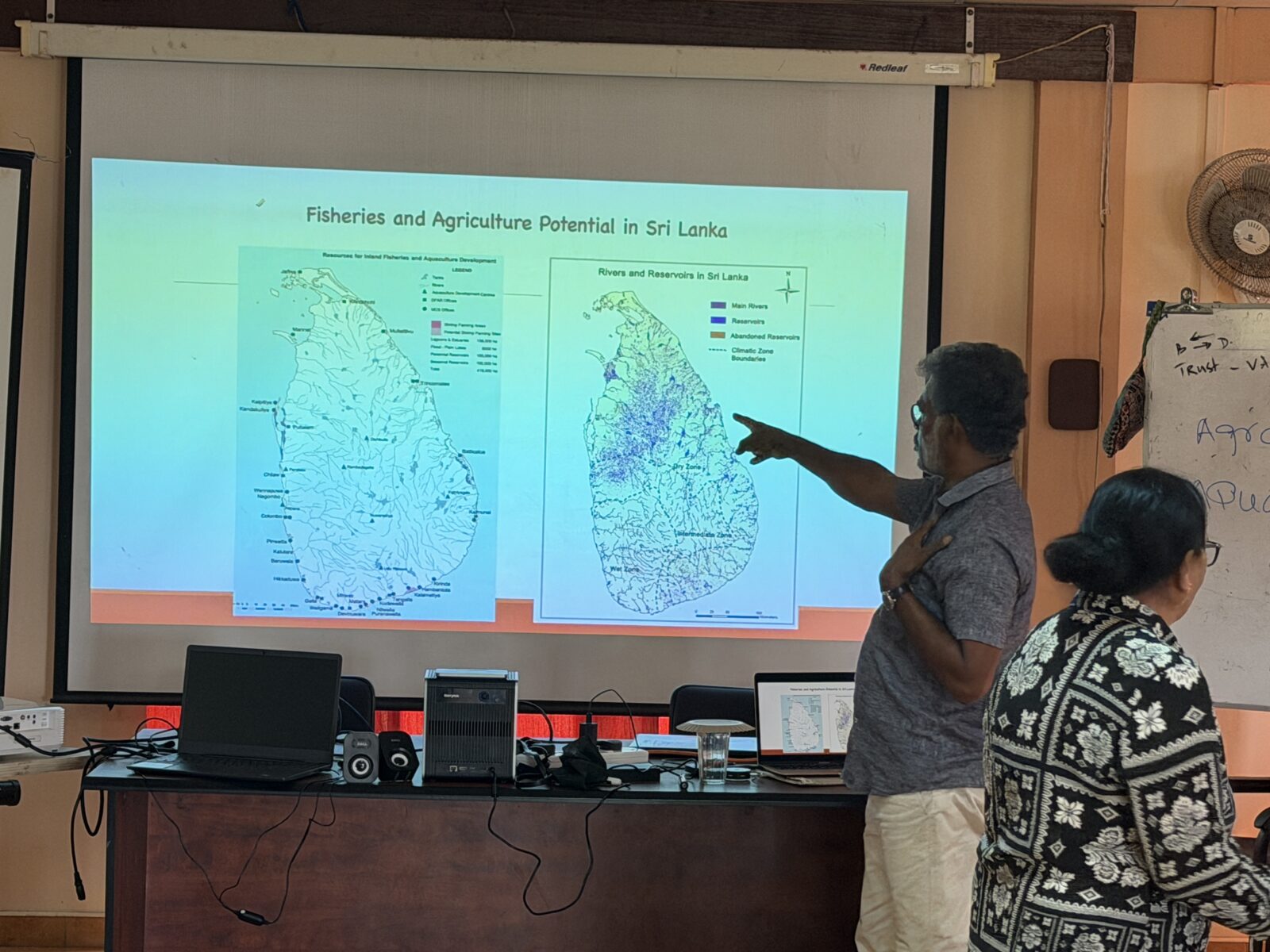
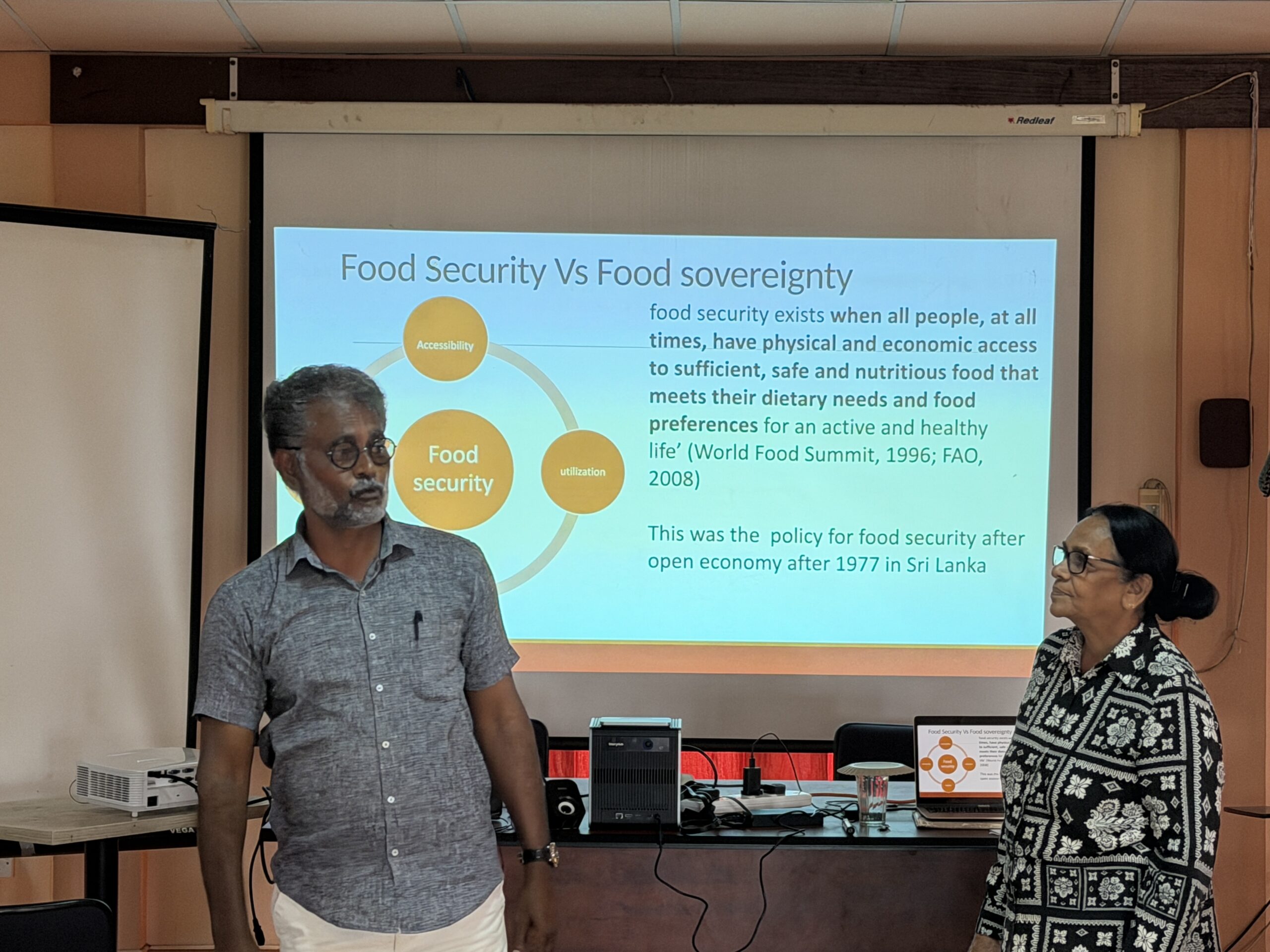
The “National Fisheries Solidarity Movement (NAFSO)”, in collaboration with the “World Forum of Fisher Peoples (WFFP)”, successfully organized an “introductory program on Aqua Ecology and Agroecology” on February 6, 2026, at the NAFSO premises. This timely initiative brought together more than 50 participants, including fisherfolk leaders, community representatives, youth, and key figures from national and international movements dedicated to small-scale fisheries, food sovereignty, and sustainable livelihoods.
The event served as an important platform to deepen understanding of “aqua ecology” and “agroecology” two interconnected approaches that promote ecologically sound, socially just, and economically viable food production systems. These frameworks are especially relevant for small-scale fishing and farming communities facing challenges such as climate change, environmental degradation, industrial encroachment, and threats to traditional and community based resource management practices.
Distinguished Participants and Leadership Presence
The program was graced by prominent leaders and allies in the global struggle for fisher peoples’ rights and sustainable food systems:
– Mr. Herman Kumara, General Secretary of the World Forum of Fisher Peoples’ (WFFP) and Convener of NAFSO, whose longstanding leadership continues to guide advocacy for small-scale fisheries worldwide.- Ms. Nadine Nembhard, Co-Chair of the World Forum of Fisher Peoples’ (WFFP), bringing international perspectives and solidarity to the discussions.
– Ms. Betty Fermin, co director of the global movements program, “Y Hunger” representing youth-driven efforts to address hunger, food justice, and ecological sustainability.
– Mr. J. Jones Spartegus, Youth leader of WFFP from south india.
– Prof. G.M. Kularathne, professor of Economics, University of Kelaniya, respected academic and expert in the field
– Ms. Madara Wijethunga, Research Officer of WFFP
– Ms. Anuka De Silva, MONLAR and Member of ICC of LVC,
Their presence underscored the collaborative spirit of the event and highlighted the growing global momentum behind fisher- and farmer-led ecological transitions.
Core Sessions: Building Knowledge and Practical Understanding
The program featured two insightful and complementary presentations that laid a strong foundation for participants.
“Madara Wijethunga”, Research Officer of the World Forum of Fisher Peoples’ (WFFP), delivered the opening session. She provided a clear and comprehensive introduction to aqua ecology and agroecology, explaining:
– The core principles of these ecological approaches,
– Their relevance to small-scale fisheries and agriculture.
– The strategic ways to implement them at community, national, and regional levels,
Through interactive explanations and practical demonstrations, Madara illustrated how aqua and agroecology can restore ecosystems, enhance biodiversity, strengthen food sovereignty, and build resilience against climate and economic pressures. Her session emphasized actionable steps that fishing and farming communities can take to adopt these practices strategically.
In the coastal fringes of Sri Lanka, small-scale fishery communities form the backbone of the nation’s marine economy, employing over 115,000 directly and supporting livelihoods for millions more through ancillary roles in processing and trade. These resilient fishers, often operating with traditional crafts and low-capital investments, contribute approximately 56% of the country’s marine fish production, bolstering food security amid challenges like overfishing, climate-induced variability, and post-pandemic disruptions. By prioritizing ecosystem restoration and innovative value chains, these communities can transform vulnerabilities into opportunities, ensuring equitable benefits for future generations.
Global Solidarity and Urgent Warnings from Youth Leadership
Mr. J. Jones Spartegus, the dynamic Youth Leader of WFFP from South India, addressed the gathering with passion and clarity. He expressed strong and continuous support for NAFSO’s efforts in advancing the aqua ecology initiative.
He praised the dedication of the NAFSO team and emphasized the critical importance of this work in the face of mounting threats. Mr. Jones drew attention to the growing dangers of land grabbing and ocean grabbing, warning that these practices—often disguised as “development”—are destroying the livelihoods of small-scale fishers and farmers worldwide.
He issued a powerful call to action, urging fishery communities across the globe to unite and resist destructive projects that prioritize profit over people and ecosystems.
Academic Insights and Practical Recommendations
Following this, “Prof. Kularathna” (a respected academic and expert in the field) delivered a dedicated presentation offering deeper academic and practical insights. His presentation included:
– Detailed explanations of ecological interactions in aquatic and agricultural systems
– How local ancient, traditional, folkish knowledge go in line with this modern aqua and agroecology concepts and importance of adopting traditional knowledge of agricultural systems
– Evidence-based benefits of transitioning toward aqua- and agroecological models
– Key challenges faced by small-scale producers in adopting these approaches
– Practical suggestions and recommendations for implementation, including:
– Integration of traditional knowledge with modern ecological science
– Examples of successful ancient agricultural models from Sri Lanka and in South Indian regions
– Steps for collective action among fisherfolk and farmers including raising awareness among these communities
Prof. Kularathna’s presentation was well-received for its clarity, depth, and forward-looking perspective, inspiring participants to envision how these principles can be adapted to local contexts.
Closing Address: Strategic Guidance from WFFP Secretary General
The program concluded with an inspiring and practical address by Mr. Herman Kumara, Secretary General of WFFP and National Convener of NAFSO Sri Lanka.
Mr. Herman highlighted the urgent need to adopt and actively implement aqua ecology and agro ecology concepts in fishing and rural communities. He stressed that these approaches are not merely environmental strategies—they are essential tools for securing food sovereignty, protecting natural resources, and building resilience against climate and economic pressures.
Going beyond inspiration, he provided clear, actionable instructions to district leaders and members on:
- How to successfully roll out these initiatives at regional and rural levels
- Practical ways to overcome resource limitations
- Strategies for raising public awareness and mobilizing broader community support
- Methods to integrate these concepts into everyday practices where families struggle to secure basic livelihoods
His guidance was direct, grounded in real-world experience, and aimed at empowering local leaders to drive meaningful change from the grassroots upward.
What aqua ecology really is ?
In an era where sustainable food production is paramount, aqua ecology emerges as a transformative approach that extends the principles of agroecology to the aquatic realm. Drawing from the well-established framework of agroecology—which emphasizes ecologically sound farming practices—aqua ecology applies these ideas to fisheries, aquaculture, and broader aquatic ecosystems. This integration fosters ecological sustainability, social justice, and food sovereignty, ensuring that aquatic resources benefit both the environment and human communities. Aqua ecology conceptualizes water bodies not merely as resources for extraction but as multifaceted entities such as ecological systems teeming with biodiversity, food commons that provide nourishment for all, cultural and social spaces that hold historical and communal significance, and foundational elements for livelihoods, particularly for coastal and indigenous populations. By viewing lakes, rivers, oceans, and wetlands through this lens, aqua ecology promotes practices that harmonize human needs with natural processes, reducing degradation and enhancing resilience. Aqua ecology fundamentally rejects extractive and profit-maximizing models of fisheries and aquaculture, instead advancing a transformative paradigm rooted in community-based stewardship, ecological integrity, and collective well-being—while placing the protection and realization of the human rights, environment rights, tenure rights, labour rights, and dignified livelihoods of small-scale fishers and fisherwomen at its very core.
How it helps to tackle climate change ?
Climate change poses severe threats to aquatic ecosystems, including rising sea levels, ocean acidification, warmer waters, and extreme weather events that disrupt fisheries and aquaculture. Aqua ecology offers robust solutions by building climate resilience into food production systems. Through practices like carbon sequestration in seaweed farms and enhanced biodiversity in polycultures, it helps mitigate greenhouse gas emissions while adapting to changing conditions. These methods not only lower emissions but also improve ecosystem health, making aquatic systems more resistant to climate-induced stresses like algal blooms or habitat loss. By sequestering carbon and restoring mangroves or wetlands as part of aqua ecological strategies, communities can combat global warming while securing food sources.
How to achieve sustainable aqua culture through aqua ecology ?
Aqua ecology pursues truly sustainable aquaculture by deliberately shifting away from input-intensive, monoculture-driven systems toward regenerative, ecosystem-aligned practices—achieved through the deliberate integration of ecological carrying capacity limits, multi-trophic and polyculture designs, habitat-forming species restoration, community-defined access and benefit-sharing rules, and continuous participatory monitoring of both ecological and social indicators—so that production remains within planetary boundaries while simultaneously securing the tenure rights, dignified livelihoods, food sovereignty, and cultural continuity of small-scale fishing and farming communities.
In the gender and youth lens
Aqua ecology deliberately centers gender and generational justice within aquatic food systems, recognizing that women and youth are not merely auxiliary actors but essential knowledge-holders, innovators, and stewards of coastal and inland waters. Women often dominate critical yet undervalued domains—post-harvest handling, drying and processing, seed/breed selection, marketing, financial management, and intra-household food distribution—while youth increasingly engage in ecological observation, digital documentation, climate-adaptive experimentation, and inter-generational transmission of local ecological knowledge. By explicitly valuing their contributions, protecting their labour rights, securing equitable access to resources and decision-making spaces, and countering historical patterns of invisibilization and marginalization, aqua ecology actively fosters inclusive governance, intergenerational equity, and gender-transformative change, thereby building more resilient, socially just, and ecologically sustainable aquatic food systems.
How it become a rights based concept ?
Agroecology’s advocacy for farmers’ rights, it extends this to aquatic domains, emphasizing the rights of fishers, indigenous peoples, and communities to access, manage, and benefit from water bodies. This framework challenges exploitative practices, such as industrial overfishing that displaces local livelihoods and small scale fishers, and instead promotes collective governance of aquatic commons. By following social justice principles, aqua ecology ensures that marginalized groups—often women and indigenous communities in coastal areas—have a voice in decision-making. It aligns with international declarations that recognize ancestral knowledge in sustainable management, viewing aqua ecology as a tool for equity and empowerment. Ultimately, it asserts that ecological sustainability cannot be achieved without addressing human rights, making it a holistic pathway to just and resilient aquatic food systems.
Way forward
Building upon the foundational training and awareness-raising achieved through the introductory aqua ecology program, the World Forum of Fisher Peoples (WFFP), in close collaboration with NAFSO and allied local movements, is now entering a new phase of intensified and multi-layered action.
Future efforts will concentrate on four interconnected strategic pillars:
- Deepened capacity building
- Territorial and policy advocacy
- Youth and women leadership acceleration
- Alliance strengthening and resistance
Through these integrated actions, WFFP and its partners aim to transform aqua ecology and agroecology from emerging concepts into lived, defended, and politically powerful realities—ensuring that small-scale fishers and coastal communities remain sovereign stewards of the aquatic and agrarian territories they have sustained for generations.
A Promising Beginning for Transformative Change
The Introduction Program on Aqua Ecology and Agroecology marked an important milestone in WFFP and NAFSO’s shared mission to defend small-scale fisheries, promote ecological sustainability, and resist resource grabbing in all its forms.
By bringing together international leaders, youth voices, academic expertise, and local activists, the event strengthened the collective resolve to build resilient, equitable, and ecologically sound food systems.
The momentum generated on February 6, 2026, will serve as a foundation for continued collaboration, training, and action across Sri Lanka and beyond. Together, WFFP, NAFSO, and allied movements remain committed to amplifying the voices of small-scale fishers and food producers in the global struggle for justice, sustainability, and the right to thrive on land and water.