For centuries, fishing has been more than a livelihood in Gaza—it has been a cornerstone of Palestinian life, culture, and identity along the eastern Mediterranean coast. The Gaza Strip’s moderate climate and strategic location have long supported year-round artisanal fishing, providing food, employment, and a deep connection to the sea for generations of families. The fishing community in Gaza has historically been tight-knit and diverse. Many trace their roots to ancient coastal traditions, with families originating from Gaza itself or displaced from northern Palestinian towns during the 1948 Nakba. These groups brought valuable knowledge and practices, enriching the local sector despite challenges from overcrowding in limited waters. Fishermen often describe their community as unified by shared hardships and the demanding nature of their work, transcending distinctions like refugee or non-refugee status. Marriages within the fishing families are common, reinforcing social bonds.
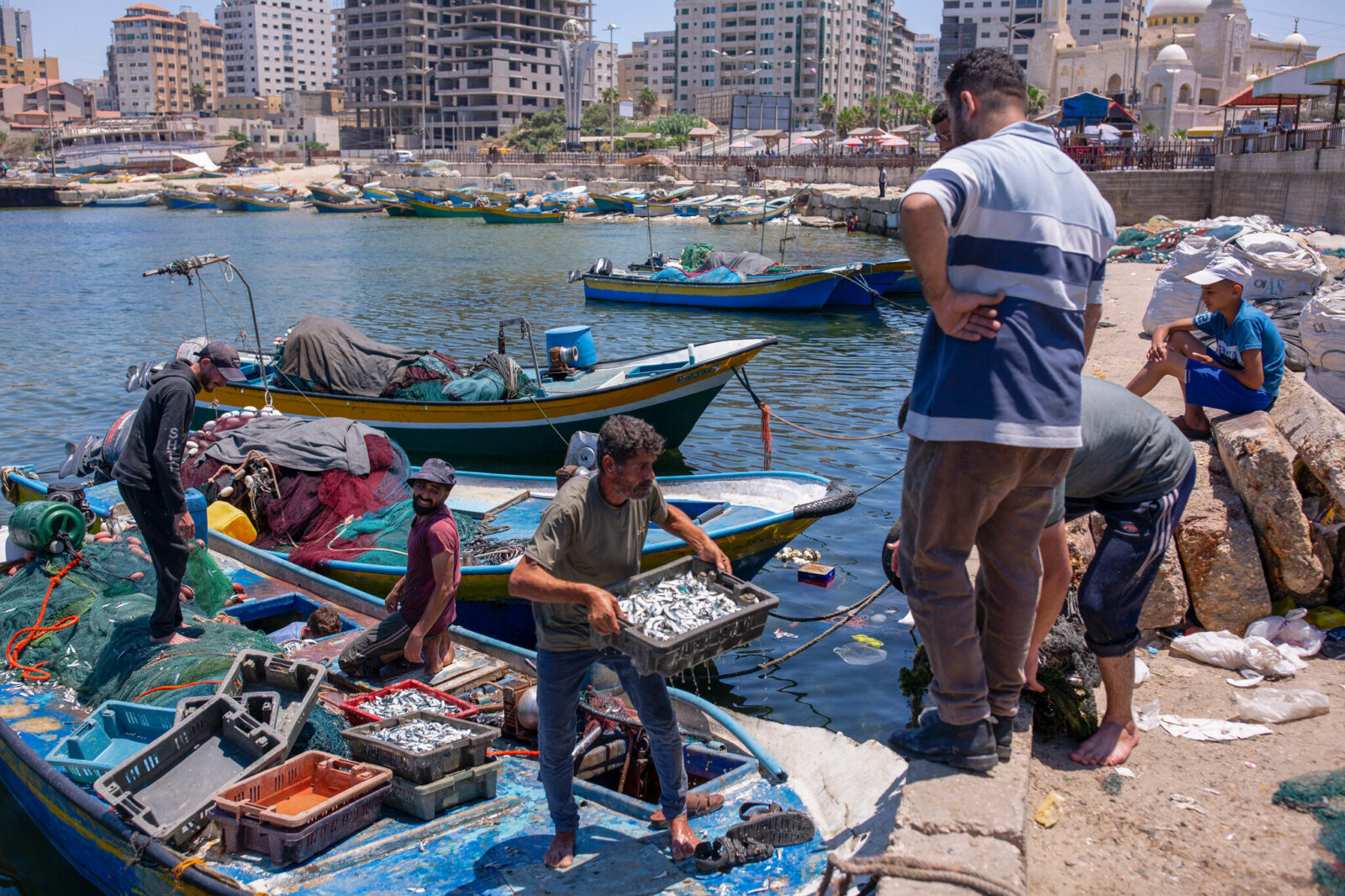
The Gaza City port served as the heart of this activity, functioning as the main hub for landing catches, auctions, and trade. Small wooden boats lined the harbor, where fishermen repaired nets, painted vessels, and socialized over coffee. The auction process, managed by traditional auctioneers (dhallals), followed longstanding customs, with fees supporting local infrastructure. Before severe restrictions intensified, the sector employed thousands directly and indirectly—including fishers, traders, processors, and restaurant owners—contributing to food security and the local economy. Fishing was a family enterprise, with boats often shared among brothers, cousins, and generations. Ownership was divided into shares, and profits split between owners and workers after expenses like fuel. Informal social protections emerged from this structure: mutual aid for damaged boats, searches for missing persons, and support during hardships. Shipowners sometimes advanced costs for housing or weddings, repaid over time. These customary practices fostered solidarity in the absence of formal safety nets.
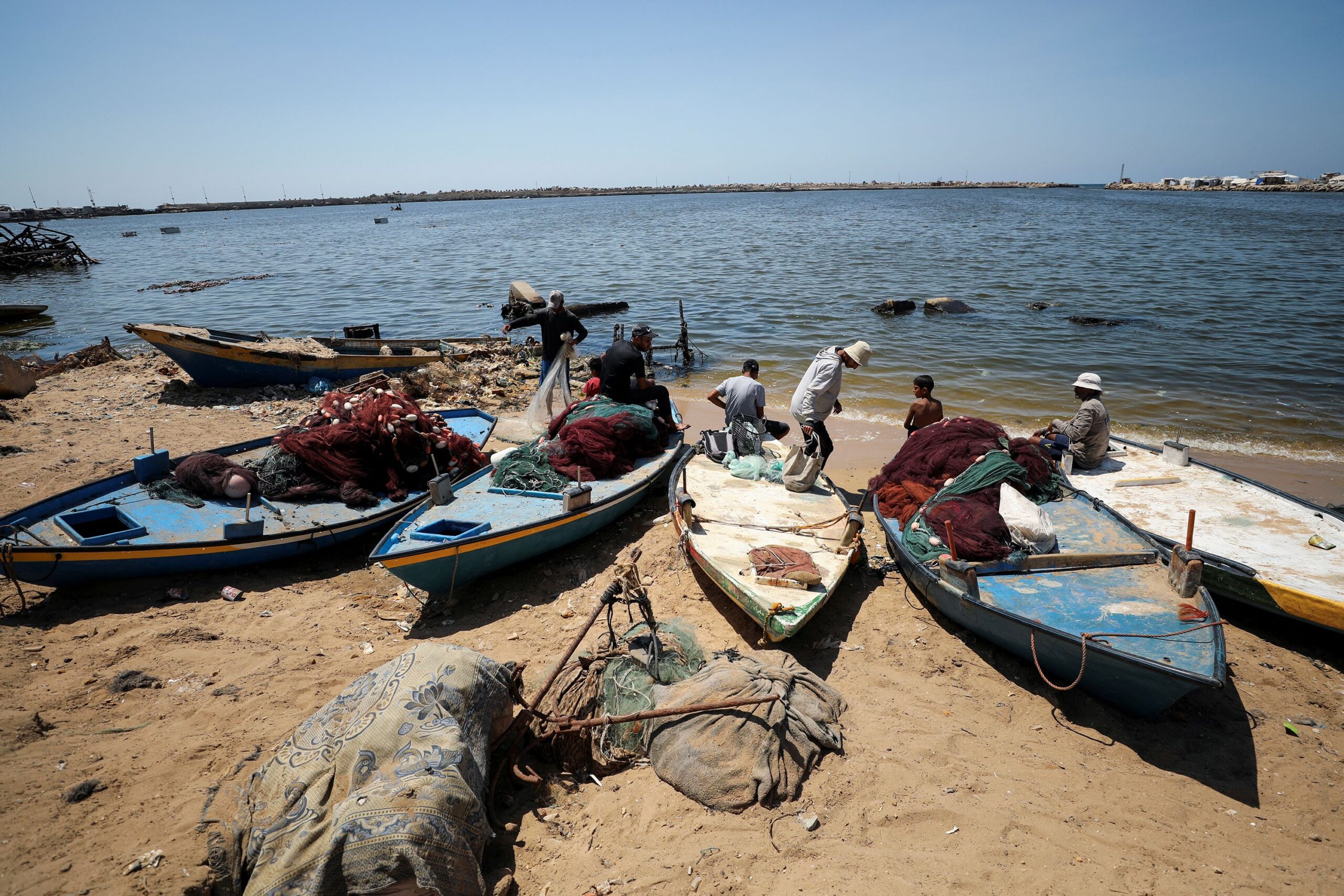
Songs and rhythmic chants accompanied daily tasks, from pushing boats ashore to warding off fear at sea or celebrating good catches. These cultural expressions, passed down through generations, strengthened community ties and expressed faith, longing, and hope. However, restrictions imposed since the 1990s—starting with Oslo-era zones and tightening under the 2007 blockade—severely limited access to fishing grounds, often to just a few nautical miles. This reduced catches, damaged boats, and blocked repairs or exports, pushing many families into poverty despite their resilience. Fishermen persisted, adapting to smaller boats, repairing gear with limited resources, and relying on community support. Women also played vital roles, from selling fish in markets to, in rare cases, fishing at sea. One fisherwoman shared how she took over her family’s boat as a teenager, facing challenges but finding acceptance within her community while enduring the same restrictions as her male counterparts. This perseverance—continuing to fish, maintain traditions, and defend their right to the sea amid life-threatening conditions—embodies “sumud”, the Palestinian principle of steadfastness. While often linked to attachment to land, for Gaza’s fishers, sumud extends to the sea. Their everyday acts—going out despite risks, repairing confiscated boats, sharing resources, and refusing to abandon their way of life—represent a form of cultural and everyday resistance. They assert dignity, preserve heritage, and challenge efforts to sever their connection to their waters.
The stories of Gaza’s fishing communities highlight a profound link to the sea as a source of identity, sustenance, and resistance. Documenting these traditions is essential to honoring their enduring spirit and ensuring their cultural legacy endures.
#standinsolidaritywithgazafishers