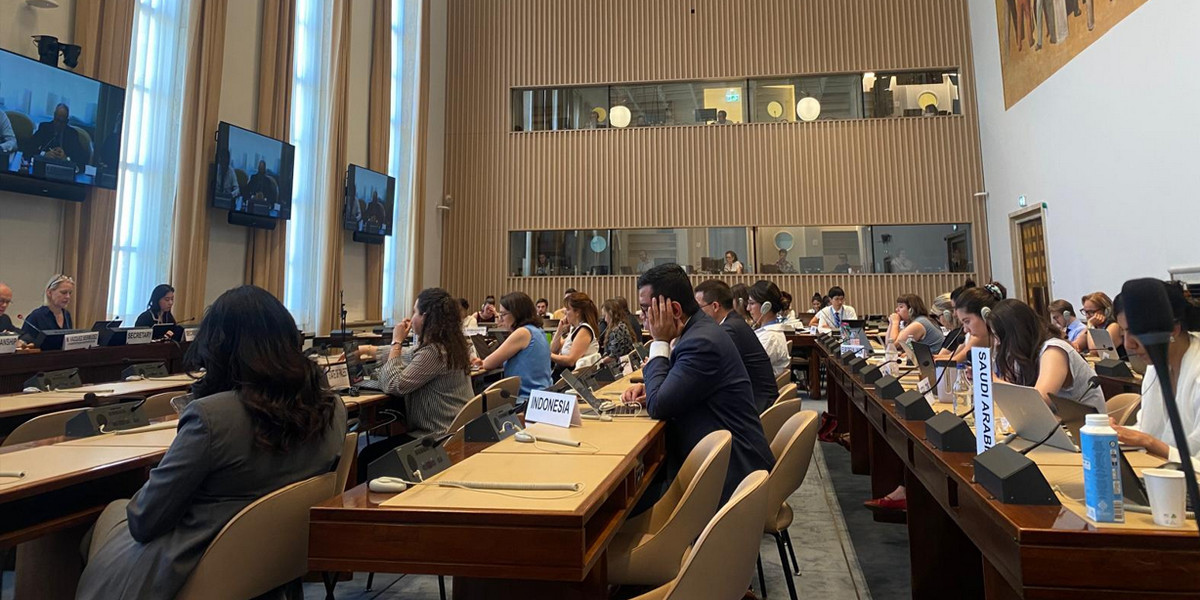
At the event held in Geneva, Switzerland, in connection with the launch of the Checkmate campaign and the 12th session of UN negotiations on a legally binding treaty on business and human rights ” Carmen ” highlighted how large scale industrial aquaculture threatens small scale fishing communities, marine ecosystems, and food sovereignty. As Director of Masifundise, a South African organisation that works to empower small scale fishers through advocacy, community organising, and policy engagement, she brings deep experience in defending the rights and livelihoods of traditional and small scale fishing communities. Representing the WFFP, a global network of fisher peoples, she has consistently called for participatory ocean governance, ocean regeneration, and stronger protections against corporate driven approaches that concentrate control of marine resources.
Her intervention at Checkmate aligns with broader concerns raised by small scale fisher movements. Industrial aquaculture can cause environmental damage (including pollution, disease outbreaks, and habitat loss), displace coastal and inland communities, rely heavily on wild caught fish for feed, and prioritise corporate profits over local food systems and human rights. These issues sit within the campaign’s focus on ending corporate impunity and securing a strong Binding Treaty that holds transnational corporations accountable for human rights and environmental harms.
The Checkmate gathering brought together social movements, unions, Indigenous Peoples, and affected communities to demand international rules that protect territories, livelihoods, and access to justice ahead of the UN negotiations. Mannarino’s contribution underscored the specific risks industrial aquaculture poses to fisher peoples worldwide and reinforced calls for governance that centres the knowledge, rights, and voices of small scale fishing communities rather than industrial expansion.